

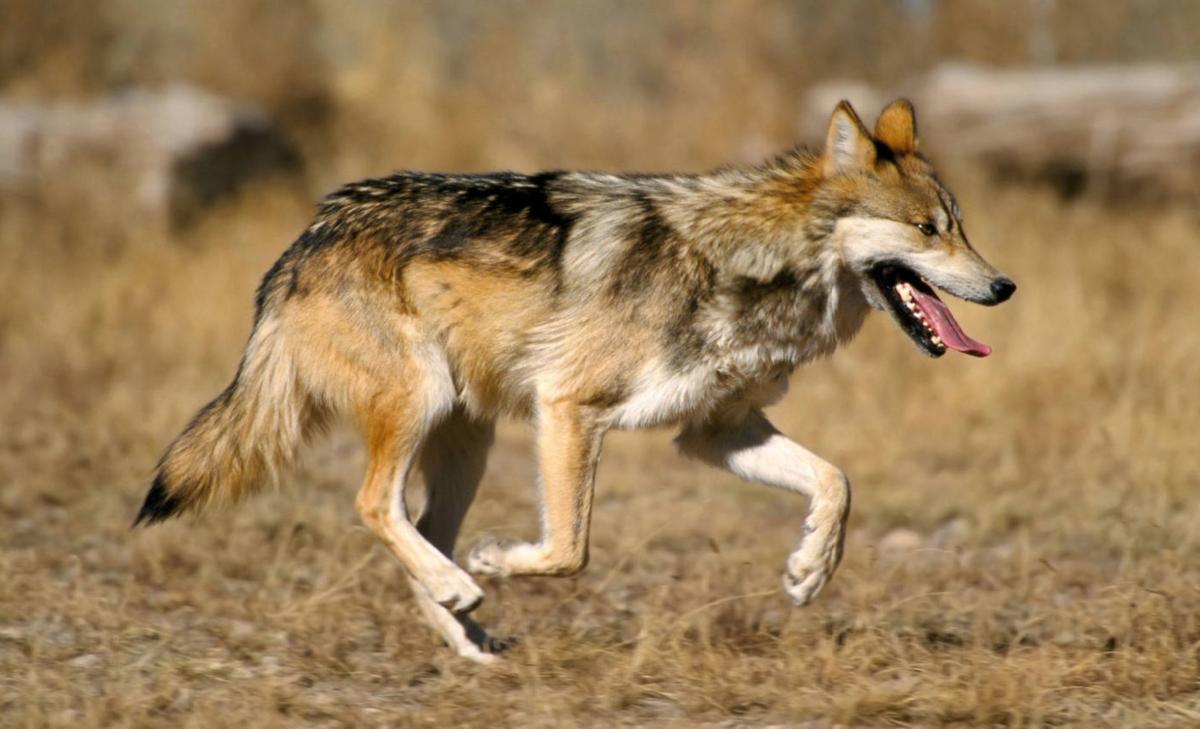
Wildlife conservation groups are suing the U.S. Fish and Wildlife Service over what they say is the agency’s failure to follow federal law in approving a program to restore Mexican wolves to Arizona.
The lawsuit filed in federal court contends the agency arbitrarily — and illegally — determined that creating and maintaining an experimental population of about 200 wolves is “not essential� to the continued existence of the endangered species. The agency said that’s because there are captive populations that could produce more if necessary.
But the issues, according to attorney Matthew Bishop of the Western Environmental Law Center, are more concrete. That includes a prohibition against wolves north of Interstate 40, with the requirement that wolves found on the other side of the highway must either be captured and returned to the area south of the road or placed in captivity.
People are also reading…
“In order to really be able to conserve the species, they need to be able to move into areas of suitable habitat in that region,� he told Capitol Media Services. And he said the “best available science� shows there are some areas north of I-40 that should be open to wolves.
Bishop also said the agency’s rules “allow for too much take and killing of Mexican wolves in the wild.�
So now Bishop, on behalf of the Grand Canyon Wolf Recovery Project and other groups, wants a judge to order the federal agency to go back and revisit its plans — and do so in compliance with the Endangered Species Act and the National Environmental Policy Act.
If the claims sound familiar, they should.
U.S. District Court Judge Jennifer Zipps ruled more than four years ago that the agency ignored the advice of “leading wolf scientists� in adopting its own recovery plan. And the judge said Fish and Wildlife officials acted in an “arbitrary and capricious� manner in deciding what to do.
However, the only thing the judge could do is order the agency to redo its plans.
But Bishop said those revisions still fall short of what the law requires — and what the scientists said is necessary to have a viable wolf population. And he said at least part of that is political.
“I don’t mean like Republican or Democrat,� Bishop said.
“A lot of people just don’t want to see wolves on the land,� he said, at least not in the amounts and in the areas where they could thrive. “They’d rather see a single, smaller population in more isolated areas.�
But that, said Bishop, is not a factor that Fish and Wildlife can taken into consideration.
“The law requires them to find the best available science in terms of what’s best for wolves and conservation,� he said.
There was no immediate response from the agency.
At the center of the legal battle is the Mexican wolf, which Bishop said historically numbered in the thousands distributed across large portions of the Southwest. But government and private eradication programs largely wiped out the U.S. population.
In 1976, the wolf was listed as an endangered subspecies of gray wolf. But none remained in the United States.
What happened is, several individual Mexican wolves were captured in Mexico, becoming the basis of a captive breeding program overseen by Fish and Wildlife. And Bishop said all Mexican wolves in existence today are derived from seven individuals.
All that led to the plan to establish an experimental population in Arizona and New Mexico — but only south of Interstate 40. And the agency rule said it would “promptly capture� Mexican wolves that leave the area and either “release it within the recovery area, put it into the captive population, or carry out any other management measure.�
By 2015, there were 75 Mexican wolves in the wild through the reintroduction program. There are now about 200.
But Bishop said that the agency rules and restrictions on where wolves are allowed still don’t guarantee the survival in the wild. And that is underlined, he said, by the agency’s declaration that those animals are “not essential.�
“The (Fish and Wildlife) Service said if the entire experimental population in the wild died, it would not appreciably reduce the prospects for future survival of the subspecies in the wild because captive populations could produce more surplus wolves for reintroduction,� he told the judge.
Bishop said the 2018 court ruling against the agency changed little, with Fish and Wildlife maintaining the same population area as before, including the I-40 northern boundary.
The lawsuit seeks reversal of the agency’s “not essential� designation with the limits it proposes.
“The best available science reveals the experimental population of roughly 200 Mexican wolves in the wild in the United States are essential to the continued existence of Mexican wolves in the wild,� Bishop wrote. He said that number would have the genetic variation that, if lost, would “appreciably reduce� the survival of the subspecies.
And Bishop said the captive breeding program is unable to replace the 200 wolves in the wild, saying the breeding population “is aging and has lost much of its genetic diversity.�
Other plaintiffs in the lawsuit include WildEarth Guardians, Western Watersheds Project, Wildlands Network and the New Mexico Wilderness Association.
Sky Island Alliance and Wildlands Network put cameras in the San Bernardino National Wildlife Refuge to document animals crossing the border through the floodgates in the border wall. Images and video courtesy Sky Island Alliance and Wildlands Network, 2022
Videos: Southern Arizona wildlife caught on camera
Playtime: Wildlife returns to backyard for some wrestling and fun
Rare ocelot caught on trail camera in Southern Arizona
Bobcat kittens play on patio furniture at Tucson home
Javelina cools off in Tucson yard
Bobcat returns to Tucson home after a year with new kittens in tow
Black bear spotted northeast of Tucson
Star reader catches glimpse of Javelina after-party at local resort
Watch as Tucson's nighttime wildlife romps around
Tucson wildlife: A peccary pumpkin party
Releasing bobcats for research
Research project continues tracking Tucson's urban bobcats
Golf course coyotes howl at sunset in northwest Tucson
Downtown Tucson got a rare visit from a wild coatimundi.
Just an ordinary bike ride ... following a bear
Bobcats play in Tucson backyard
Watch now: Bear sightings reported around Pima County
Watch now: Bobcats playing on an Oro Valley Golf Course
Watch now: Mountain Lion strolls outside home in Tucson Foothills
Watch Now: Trail cameras catch mountain lions at Tucson home.
Watch Now: Bobcat Sadie and a friend drink from a backyard fountain.
Watch now: Family of bears takes a stroll in southeastern Arizona
Watch Now: Mountain lion roaming in the Coronado National Memorial
Watch now: Ding, dong! Bobcat filmed by front door camera in Tucson
Watch now: Bear captured in Sierra Vista neighborhood, released
Watch now: A cool cat takes a cool nap in the Foothills
Watch now: Young bear seen in NW Tucson captured and released
Watch now: Bear spotted rummaging through trash can in Oro Valley
Watch now: Bobcat's breakfast near Oro Valley
Watch now: Breakfast with the deer on Tumamoc
Watch now: Bobcat kitten plays with mother behind Tucson residence
Watch now: Rescued porcupine released back into wild
Watch now: Bobcat kittens play in a dry fountain
Watch now: Bobcat stops by Tucson waterhole for an overnight drink
Watch Now: Collared bobcat raises kittens in Tucson neighborhood
Watch now: Javelina family takes an evening stroll in midtown Tucson
Bobcat plays with its kitten in Tucson backyard
Watch now: Mountain lion seen up-close on camera outside Tucson home
Watch now: Bobcats in love in the Tucson area
Watch Now: Family of deer eating breakfast on Tumamoc Hill
Watch now: A hummingbird plays in the sprinkler
Watch now: Breakfast time for the Quail family in the Tucson area
Watch now: Frequent visitor to northwest Tucson home munches on meal worms
Watch now: Playful lizards visit a Tucson back yard
Watch now: Startled mountain lion at Loews Ventana Canyon
Watch now: A true lounge lizard in Tucson
Watch now: A spotted skunk threatens the worst at Saguaro National Park
Watch now: Javelina mama and babies
Watch now: Mountain lion outside a home in the Tucson Mountain foothills
Watch now: Family of bobcats spotted in Foothills back yard
Watch now: Backpacker’s intense standoff with mountain lion near Tucson
Watch now: Javelina rescued from trash can in Foothills neighborhood
Watch now: Owl takes a bath in trough on Tucson's northwest side
Watch now: Coyote pups play in front yard near Tucson Estates
Bighorn sheep scatter in Catalina Mountains during aerial survey
Watch now: Bighorn sheep enjoy post-monsoon greenery near Tucson
Watch now: Bear has a rub-a-dub in watering hole near Tucson
On Twitter: @azcapmedia


 Google to pay Arizona $85 million in privacy case


