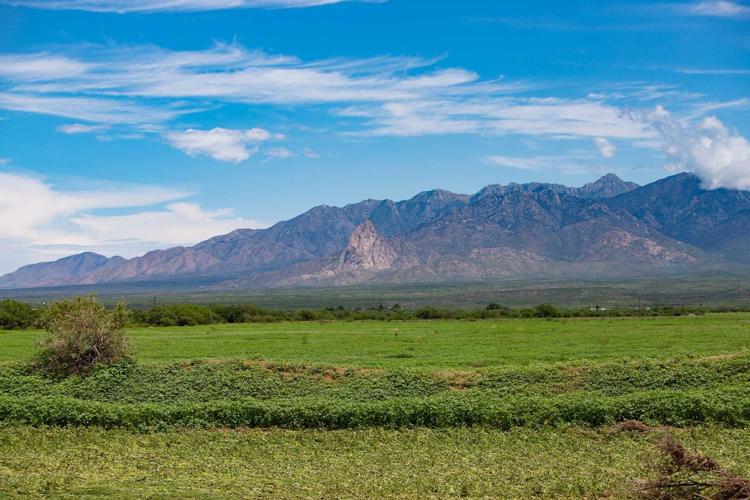
Federal plans to expand the U.S. Border Patrol checkpoint near Amado on Interstate 19 have alarmed residents of the nearby towns, who say expanding the current temporary structure onto a 17-acre parcel of land east of the highway is unnecessary, costly and harmful to the local economy and environment.
Santa Cruz County officials said they'll oppose the project in their written response to U.S. Custom and Border Protection's request for comment on the expansion. But officials also said CBP intends to carry out the expansion, with or without local support.
CBP, parent agency over the Border Patrol, plans to spend between $50 million and $100 million on expanding the I-19 checkpoint, south of Amado, according to an on the Department of Homeland Security's Acquisition Planning Forecast System, which records potential large contracts.
People are also reading…
The project is one of several checkpoint-expansion contracts CBP is currently seeking to award, including  checkpoint expansions in and in New Mexico.
CBP has also tried to acquire 14 acres of land near another Border Patrol checkpoint east of I-19 on West Arivaca Road, which locals say is often unmanned. The 14-acre parcel near the checkpoint is owned by the Arizona Land and Water Trust and is part of the Sopori Farm and ranch property that the trust finished purchasing in 2025.
The conservation group does not intend to sell to CBP, said Cameron Becker, executive director of the nonprofit.
"We expressed to (CBP) that we purchased the property using donor funds for conservation and open space, agricultural lands and wildlife habitat. Selling and subdividing the property would not be within our goals and objectives for the property," Becker said.

U.S. Customs and Border Protection has approached the nonprofit Arizona Land and Water Trust about buying a portion of the historic Sopori Farm property, located near an often-unmanned U.S. Border Patrol checkpoint on West Arivaca Road. The trust, bought the Amado property for conservation purposes, has declined CBP's offer, executive director Cameron Becker said.Â
CBP has not responded to the Star's request for comment on the local opposition to the I-19 checkpoint expansion and the possible expansion of the checkpoint on West Arivaca Road.
In a July letter to Santa Cruz County officials, CBP said it's undertaking an environmental assessment of the I-19 checkpoint project and requested the county's input by Aug. 29.
But the letter contained little detail about the planned facilities, other than that the new checkpoint would include 17.4 acres of land east of I-19, near the current checkpoint.

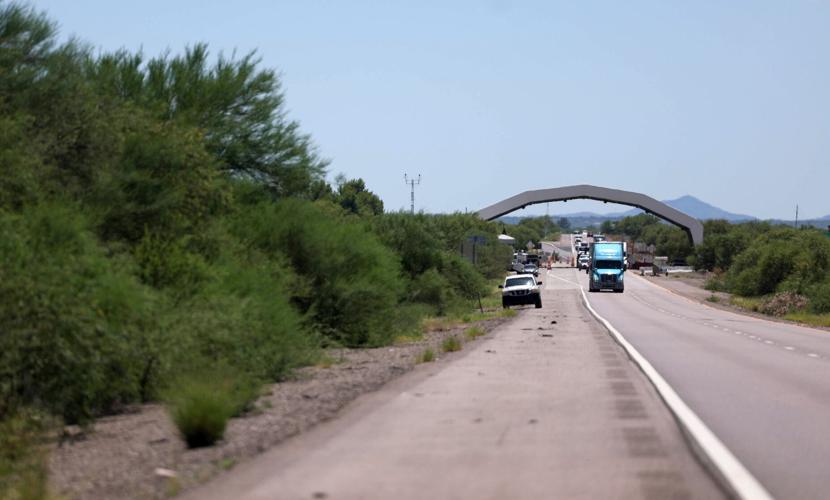
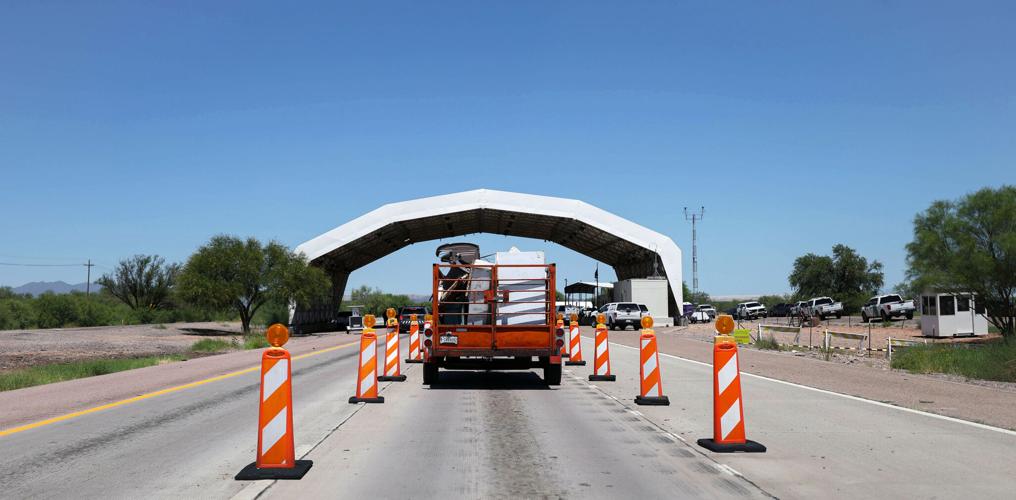
The current U.S. Border Patrol checkpoint on Interstate 19, near Amado, is a temporary canopied structure located about 25 miles north of the U.S.-Mexico border. U.S. Customs and Border Protection, Border Patrol's parent agency, wants to expand the checkpoint into a permanent facility on 17 acres of land east of I-19.
"We don't have the information necessary to even talk about what they’re going to do, and we’re asking them at least to provide it," said Jesus Valdez, Santa Cruz County manager.
CBP's letter said the new checkpoint would "alleviate the overcrowded conditions, safety risks, and deficient facility conditions that exist at the current I-19 checkpoint."
"The capacity of the current checkpoint has become inadequate due to an increase in traffic flow. The new checkpoint will reduce overcrowding, provide adequate space for inspection, equipment storage and vehicle parking, as well as provide a safe environment for border patrol personnel and visitors," the letter said.
Several residents of Tubac, a historic community south of the checkpoint, questioned the necessity of subjecting tractor trailers, many carrying fresh produce from Mexico, to another inspection after those trucks already went through inspections at the U.S.-Mexico border, 25 miles south of the I-19 checkpoint.
They also said agents staffing the checkpoints rarely open the third lane they have available for inspections, making it hard to see why the expansion is needed.
Tubac resident Kathleen Vandervoet said she'd like to see public meetings on the proposal.Â

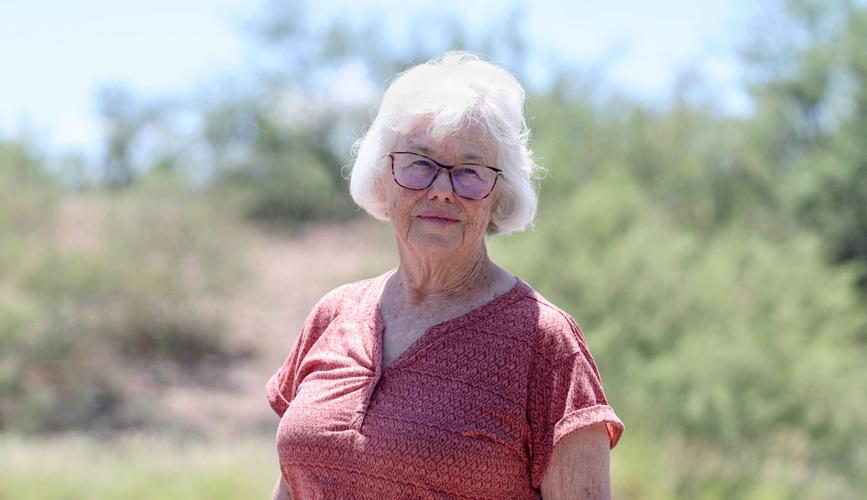
Tubac resident Kathleen Vandervoet, posing for a photo near the U.S. Border Patrol checkpoint on Interstate 19, said she'd like to see public meetings on the proposal to dramatically expand the checkpoint. "The Border Patrol has not shown any reason why it's needed," she said. "They won't share any information with us, but they want to take steps that will be horrific for the community."
"The Border Patrol has not shown any reason why it's needed," she said. "Even if they’re not required to speak to the community, why wouldn't they? ... How can Santa Cruz County even respond when they don't know what it's going to look like? They won't share any information with us, but they want to take steps that will be horrific for the community."
This month, some Santa Cruz County residents and local officials met informally with a CBP official to discuss the project, said Supervisor John Fanning, whose district includes the I-19 checkpoint.
"We support strong border security to combat drug trafficking, human smuggling, other criminal activity. I want to make sure people understand that," Fanning said. "We’ve always supported border security. We just want that border security as close to the international border as possible.�
Leaders of the Santa Cruz Valley Citizens Council, which has 500 members, lodged their opposition to the expansion during that meeting, said Mary Vanis, council president. The group is considering legal action to fight the project if CBP moves forward.
They say the project's large footprint would cause unnecessary environmental and economic damage, and would also threaten Tubac's international "dark skies" designation.
The historic communities of Tubac and Tumacacori, both south of the checkpoint, bring a substantial amount of tourism to Southern Arizona, including visitors to Tumacacori's historic Spanish mission and the Tubac Presidio State Historic Park, as well as "astrotourists," stargazers seeking dark-sky destinations, Vanis said.
While a county lighting ordinance requires dark-sky-friendly lighting in the area, "the federal government doesn’t have to abide by the county standards," Vanis said.
Vanis said some checkpoint upgrades could be warranted, "but not this massive 17- to 20-acre footprint."
Details scarce
County manager Valdez said he's heard the concerns from Santa Cruz County residents and he's taking those concerns seriously.
"Constituents do not support a permanent checkpoint. They don't like the appearance, the perception it creates for the community and the potential effects on property values," he said. "We feel the resources that are being used at the checkpoint, we would like those resources to be reallocated to the port of entry (in Nogales)."

Residents of the communities near the current U.S. Border Patrol checkpoint on Interstate 19, near Amado, say they're strongly opposed to expanding the checkpoint into a permanent facility on 17 acres near the current checkpoint site. The existing checkpoint already deters tourists, said Roberta Stabel of Tubac. "People hear there’s a checkpoint and they think they need to have a passport or something to get home,� she said. "It’s had a real chilling effect on travel in the area."
Other projects listed on DHS's contract portal contain more details in their descriptions than the listing for the I-19 project. For example, in Sierra Blanca, Texas, a proposed checkpoint expansion — also estimated to cost between $50 million and $100 million — will feature three non-commercial and five commercial primary inspection lanes, "with corresponding secondary inspection capacity," the Ìý²õ²¹¾±»å.
Contractors will design a main checkpoint building with room for 18 agents and the capacity to hold up to "40 occupants." The contract will include the primary and secondary inspection lanes, canopies, and non-intrusive inspection areas, associated support buildings, short-stay kennels for dogs, a seizure lot, water and wastewater systems, technology infrastructure and security systems, the description said.
Lance Jungmeyer, president of the Fresh Produce Association of the Americas, said CBP has not contacted the industry group about the proposed expansion. While he says produce trucks sometimes face a delay of "10 minutes or more" at the current checkpoint, he's concerned an expansion could potentially worsen delays.
During peak season, about 2,500 trucks a day cross the Tubac checkpoint, loaded with fresh produce, Jungmeyer said.
More funding for non-intrusive inspections of trucks at the border would be "better than putting the resources at a secondary checkpoint two dozen miles from the border," he said in an email.Â
"While we support Border Patrol’s mission, we have long been concerned that the Tubac checkpoint is unnecessary and burdensome, considering that all fresh produce crossing the border is already subject to inspection by Customs and Border Protection" at the border, Jungmeyer said.
"If the checkpoint is being expanded and/or made more permanent, there should be more coordination with the produce industry and the state," he said. "This industry is an important economic driver for Santa Cruz County and the state, and we cannot afford to lose efficiency in transit."
Eminent domain on the table
Supervisor Fanning said he’d worried the Board of Supervisors made a mistake in January, in voting to allow CBP to start studying county land adjacent to the checkpoint through a "right-to-use" agreement.Â
But Fanning said he thinks engaging with CBP is the best way for the county to at least have a say in their plans, as the agency can forcibly acquire the land if the county refuses to sell it, he said.
"The federal government could have exercised eminent domain and moved forward with condemnation, if we had not allowed them to conduct a study on that land," he said. "I caught a little grief for approving that, but at least it’s allowed us to have a seat at the table."
CBP has also reached out to private landowner Laurinda Oswald, seeking 18 acres of her land near the current checkpoint, Oswald told the Star. The longtime rancher said she's prepared to fight a federal effort to take her land through eminent domain if it comes to that. Eminent domain is a process the government can use to seize private land for public use if it provides fair compensation to the owner.
"I'm equipped to hire lawyers to do their best," she said.
For 40 years, Oswald has managed a ranch in Amado, east of I-19, that her family bought in the late 1950s. Oswald said CBP first approached her about buying some of her land late last year. Initially, she was open to selling a couple acres to CBP to upgrade the checkpoint, she said.
But in March, CBP showed her plans for a nearly 18-acre "complex," adjacent to the highway, that included multiple traffic lanes, a place for secondary inspections of trucks, kennels for dogs and a holding facility for people who have been detained, Oswald said.
"My takeaway was that it was very militaristic. It was 8-foot fence with razor wire, with lights all over the place," she said.
Oswald said she declined to sell before even asking how much CBP would offer.
"I’m like, 'No, I don’t think so,'" she said. "I go through the checkpoint; there’s not enough activity to justify what they planned. That's the bottom line. … All those trucks have already been through hours at the border to come through. Do they really want to go through another major shakedown at 30 miles in? Come on."
Oswald said she thinks CBP's urgency to expand checkpoints in the U.S. interior is being driven by the billions in funding DHS received under the so-called "One Big Beautiful Bill," passed in July 2025, that the agency wants to spend before President Donald Trump's term ends in two years.
"My reaction is, 'Okay, we just have to stall, stall, stall,'" Oswald said.Â
The funding legislation included $51.6 billion for construction and maintenance of the border wall, CBP checkpoints and CBP facilities. Oswald thinks that money is also driving DHS's spending spree on not one but two border walls across the southern border, including through Tohono O'odham Nation land, despite the Nation's vehement opposition.
"They obviously just have way too much money to spend," she said.Â
Long-time goal
CBP has long sought to expand the I-19 checkpoint and make it a permanent structure. Until 2006, Congress previously restricted the U.S. Border Patrol from constructing or operating permanent checkpoints in the agency's Tucson Sector.
After 2006, CBP faced pushback from local residents and questions from then-U.S. Rep. Gabrielle Giffords, a Democrat, as it sought to establish a permanent I-19 checkpoint. CBP eventually agreed to build an "interim" checkpoint between Amado and Tubac, under a large canopy stretching across the highway, with plans to later construct a permanent facility.
That interim checkpoint — still in use today — cost $1.5 million and opened in 2010, the ÃÛÌÒÓ°ÏñAV reported at the time.
Federal law allows Border Patrol to conduct certain types of warrantless stops and searches within 100 miles of the border. CBP has said the I-19 checkpoint is a key tool for border agents in the Tucson Sector.
In May 2025, Border Patrol agents seized more than 200 pounds of methamphetamine from two separate inspections at the I-19 checkpoint, a CBP release said.
"Immigration checkpoints play a vital role in our multilayered defense strategy, and the checkpoint on I-19 is one of the busiest in the United States," Sean McGoffin, then-chief patrol agent of the Tucson Sector, said in the release. "This is yet another example of how our agents tirelessly protect the nation, enforcing our immigration laws and keeping dangerous drugs out of our communities."
Santa Cruz County Sheriff David Hathaway, a Democrat, said successful busts at a checkpoint don't justify stopping travelers without cause in the interior of the U.S., miles from the border.
"You can have the same effect if you put a checkpoint between St. Louis and Chicago on Interstate 70," he said. "If you’re going to go along with that idea that we’re a police state, and we’ll place checkpoints on major corridors and force everybody to stop, even though there’s no probable cause to indicate they’ve committed a crime, I think it’s a slippery slope."
Roberta Stabel, 85, has lived in the Tumacacori and Tubac area for more than 50 years. She worries a large permanent checkpoint will change the unique character of the historic area, which is home to more than 100 resident artists, and will hurt businesses that already suffer due to the existing checkpoint.
"People hear there’s a checkpoint and they think they need to have a passport or something to get home," she said. "It’s had a real chilling effect on travel in the area."
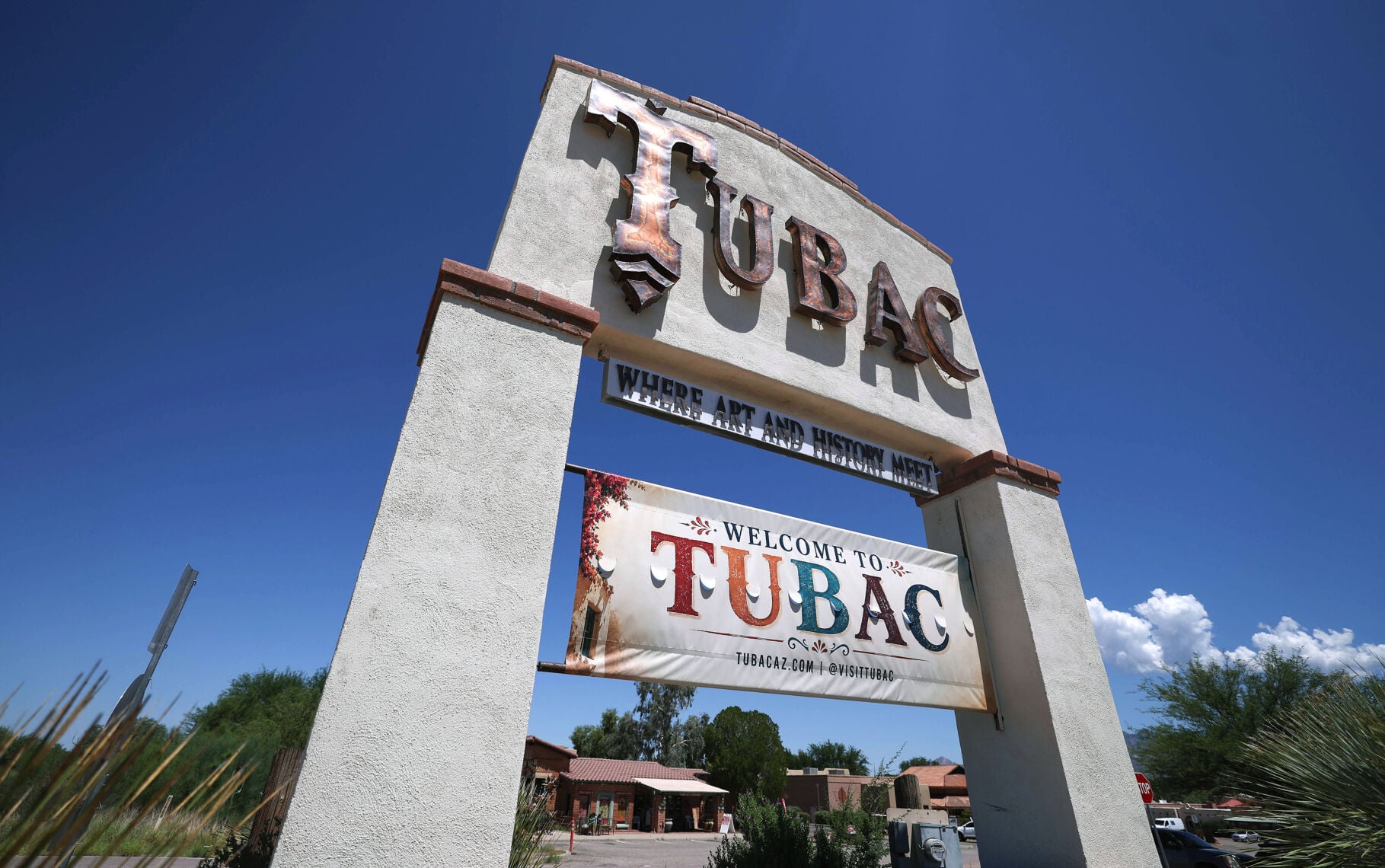
Opponents of the proposed expansion of Border Patrol's I-19 checkpoint say the project's large footprint would cause unnecessary environmental and economic damage, and would also threaten Tubac's international "dark skies" designation. While a county lighting ordinance requires dark-sky friendly lighting in the area, "the federal government doesn’t have to abide by the county standards," said Mary Vanis, president of the Santa Cruz Valley Citizens Council.
Olivia Ainza-Kramer, president and CEO of the Nogales-Santa Cruz County Chamber of Commerce, said, so far, the chamber hasn't heard concerns from local businesses about the planned checkpoint expansion, but the chamber is open to community feedback.
"We certainly recognize that individual residents, businesses, and communities such as Tubac may have questions or concerns regarding traffic flow, accessibility, tourism, and potential economic impacts," she wrote in a Friday email. "If those concerns are brought to the Chamber by our business community, we will listen carefully and, when appropriate, communicate them to the relevant agencies and stakeholders."
Contact reporter Emily Bregel at ebregel@tucson.com. On X, formerly Twitter: @EmilyBregel

Emily Bregel
Border reporter


 Plans for border walls on Tohono O'odham land a 'betrayal,' chairman says