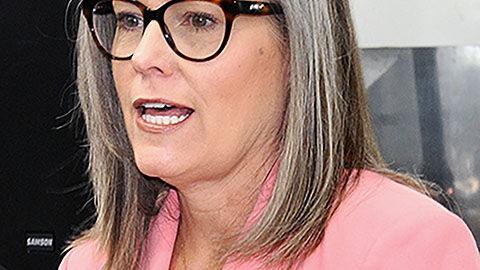
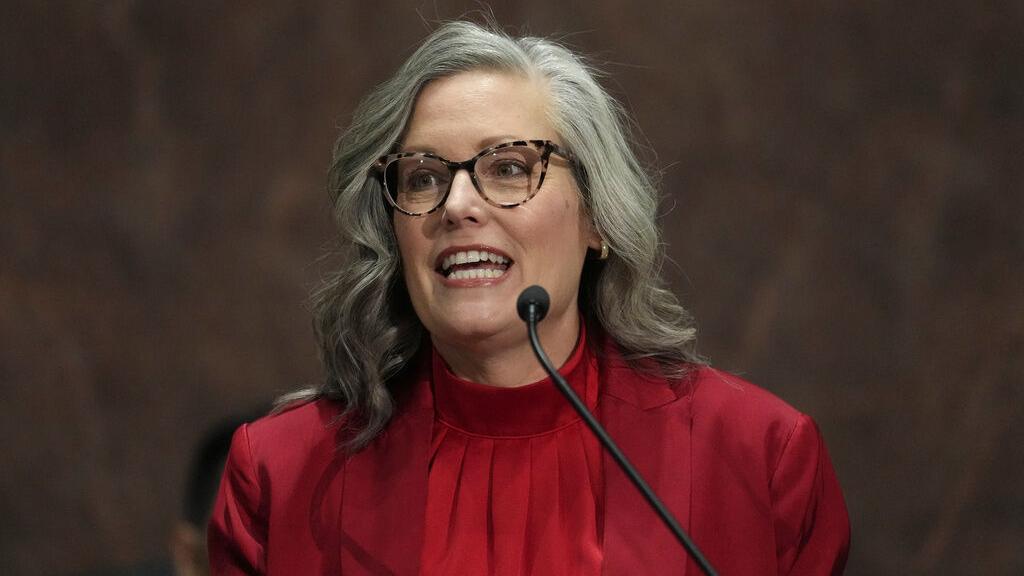
PHOENIX — Republican lawmakers are moving to clip the wings of Democratic Attorney General Kris Mayes, with one legislator calling her a "bully.''
Legislation approved by the Republican-controlled House and Senate would allow those who think they have been damaged by an improper "nuisance'' or "consumer fraud'' lawsuit to sue the attorney general for damages — everything from legal fees to lost profits and a reduction in the value of a business.
It would not be absolute. The action the attorney general took against them would have had to be dismissed or found to have no merit. And the person filing the suit would have to show that the attorney general knew the action lacked merit, or, at least, that she publicized the case.Â
Benson Republican Rep. Lupe Diaz said the legislation should be enough to restrain any overly anxious attorney general from going after businesses by using nuisance claims.
People are also reading…
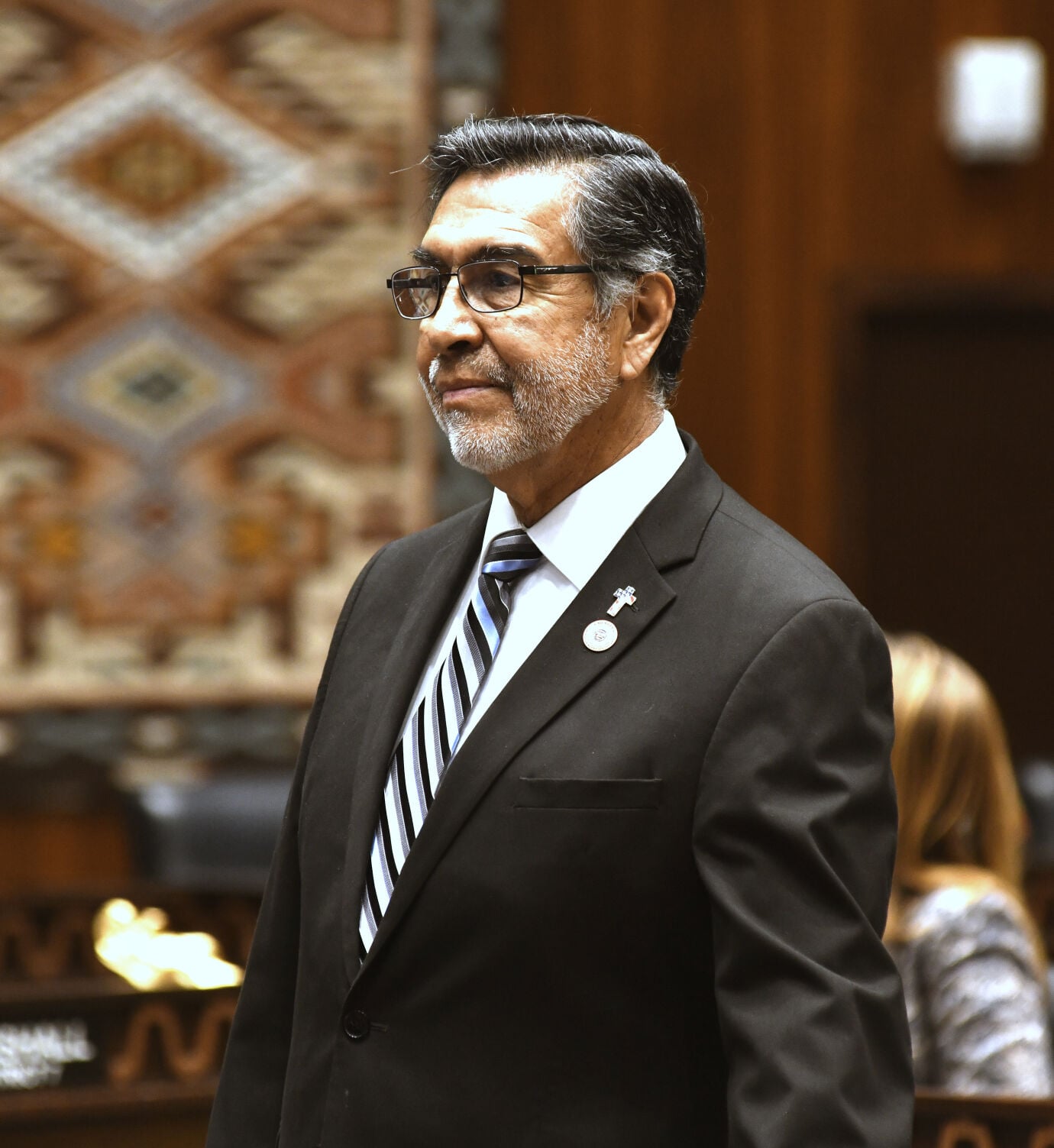
Rep. Lupe DiazÂ
Mayes, however, says she is acting to protect residents from corporations that take advantage of the failure of state lawmakers to regulate groundwater pumping in rural areas.Â
House Bill 2167 is just one of three measures filed by Diaz that he says are aimed at Mayes — and how he contends she is acting improperly in using public nuisance laws to go after companies over the amount of groundwater they are pumping.
One of the proposals would make the attorney general automatically guilty of defamation if she filed a public nuisance lawsuit that, as in the case of HB 2167, lacked merit and she knew it and publicized it.
A third would prohibit an attorney general from filing a nuisance action unless she first had the permission of the county board of supervisors.
So far, though, it is only HB 2167 that has cleared both the House and Senate and is now on the desk of Democratic Gov. Katie Hobbs.
What started all this is that Mayes filed suit two years ago against a Saudi company to force it to stop "excessively pumping groundwater'' at its western Arizona alfalfa operations and require it to set aside funds to compensate neighbors it damaged.
She is using a largely untested legal theory that the actions of Fondomonte created a "public nuisance'' by pumping so much water it has dried up the wells of nearby neighbors and resulted in subsidence of the land around Vicksburg in La Paz County.

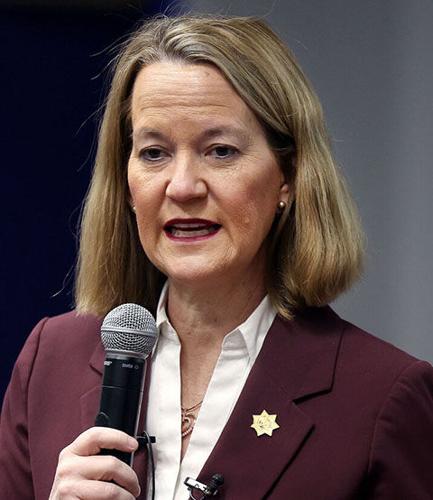
Arizona Attorney General Kris MayesÂ
That case is still pending. Any new state legislation would not affect it.
Since that time, however, Mayes used the threat of a similar lawsuit to force Riverview LLP, a Minnesota company that owns two large dairies in the Willcox basin, to take 2,000 acres of farmland out of production and set aside $11 million for well drilling and water access for affected residents in Cochise County's Sulphur Springs Valley.
Mayes has suggested she might use the same nuisance law to go after others withdrawing large quantities of groundwater in rural areas where there now are few, if any, state restrictions.
"People are not trusting government today,'' Diaz said of his legislation. "This will help to be able to bring some accountability and some comfort to those that may be feeling like Big Brother is coming against them.''
He made it clear his aim is narrow: to rein in the use of nuisance laws by Mayes and any future attorney general.
"I think that will help them think twice about pursuing these and putting the public in a position of having to defend themselves in court and spend all that money doing that,'' Diaz said.
Rep. Teresa Martinez had a simpler explanation for her support of curbing Mayes' power.
"I hate a bully,'' said the Casa Grande Republican.
But Rep. Mariana Sandoval, a Goodyear Democrat, said she sees the legislation through a different lens.
"This is a thinly veiled attempt to intimidate the attorney general and shield powerful foreign corporations like Fondomonte and Riverview from accountability for draining Arizona's scarce groundwater,'' she said.Â
Fellow Democratic Rep. Stephanie Stahl Hamilton of Tucson said she, too, isn't buying Diaz's argument that he is attempting to shield common people from the abuses of large government, especially when it comes to Mayes using the public nuisance law. That law is the one option the attorney general says she has to deal with excessive groundwater pumping in rural areas.
"When I think about standing up for the little guy, and I think about who the little guy is in the state, I can't discount the stories that I've heard of people who go to turn on their tap water, and there's no water there,'' Stahl Hamilton said.
"I cannot discount the stories I've heard of foundations cracking, thus eliminating any kind of equity in home ownership. And I absolutely think that our attorney general is listening to the little guy in this case and is paving a way forward," she said.Â
All that goes to the regulation — or lack thereof — of groundwater pumping in rural areas.
Major urban areas are located within "active management areas'' where pumping is monitored and regulated by the state. There also are "irrigation non-expansion areas'' with certain limits.
But pumping is ungoverned pretty much everywhere else. And efforts by some local officials in rural counties to force better oversight have gone unheeded.
Mayes noted that gap in the law when filing suit against Fondomonte, which came here to grow alfalfa to feed dairy cattle in Saudi Arabia, where such farming is not allowed.
"Fondomonte is taking advantage of Arizona's failure to protect its precious groundwater resources,'' she said.
Mayes said she used the public nuisance provision in the state criminal code because Fondomonte's operations are harming its neighbors, which fits the "nuisance" definition.
Mayes wants a court order enjoining the "excessive'' pumping of groundwater.
Her lawsuit against Fondomonte doesn't define that in actual terms. But Mayes said that in 2023 alone, the comapny used about 31,196 acre-feet of water — more than 10 billion gallons — considered enough to serve about 93,000 single-family homes.
She also wants Fondomonte to set up an "abatement fund'' to reimburse others who have been affected.
Among the issues that Maricopa County Superior Court Judge Scott Minder has to decide is whether any of this fits within nuisance laws.
The only known use of the law in a situation like this came earlier in Mayes' tenure, when she used it to go after a company's plan to mine rock and gravel on a 25-acre parcel it owned in a neighborhood in a rural area near Chino Valley. The site was within 100 feet of homes.
When the state mine inspector said he had no authority to block the plan, Mayes cited nuisance laws and got a court to issue a preliminary injunction.
Only thing is, there never was a final ruling on whether the mine was a nuisance, or whether the nuisance law applies. The lawsuit went away when someone else bought the land and mining plans were abandoned.
It is the future use of those nuisance laws Diaz wants to restrain.
He said Mayes — or any other attorney general — legally still could pursue nuisance claims. But Diaz said his HB 2167 sets the stage for someone to be able to fight such a claim and recover damages.
That kind of law, he said, might have resulted in a different outcome in what happened with Riverview.
Diaz does not dispute that there are people in the Willcox area who found their wells were drying up. But he said most went down between 100 and 300 feet; Diaz said Riverview was drawing from a different layer in the aquifer at 1,200 feet.
"And then she comes in and threatens that she's going to take them to court,'' he said.
The company never admitted it was part of the problem. But Diaz said that, under threat from Mayes, it decided it was better to settle — and pay the $11 million — than risk the same kind of litigation as Fondomonte.
Under his measure, he said, a company could fight the attorney general with a better chance of recovering not just its legal fees, which is typical in many civil cases, but also any other damages it might incur, such as lost sales, lost profits, and loss in the value of the business.
"I believe she was using her position to extort,'' Diaz said.
But Tempe Democratic Sen. Lauren Kuby said it's not like Mayes was simply out looking for someone to sue.
"In the Riverview case, the Willcox basin residents were faced with drying wells,'' Kuby said. "They called upon her office after years of heavy pumping by a large dairy.''
The settlement to provide $11 million and fallow 2,000 acres is "a concrete fix for a real, ongoing harm,'' she said.
Kuby said that's precisely what's wrong with HB 2167.
"It would tie the hands of one official, our attorney general, who can act and is acting when communities raise the alarm across our state,'' she said. "Riverview shows the model: When harm is real and urgent, the AG must be able to act decisively.''
Diaz, however, said not everything — including wells drying up — requires intervention by the attorney general.
"We have been in an almost close to a 30-year drought now,'' he said. "With that comes a lot of things that we are not prepared for. But we also are a very creative people.''
Consider, he said, people in his Southeast Arizona district whose wells have run dry.
"They have bought tanks, they transfer their water, and they continue to move on,'' Diaz said, without "everything to be the government to bail everybody out.'' He said there are government programs designed to help rural communities build or improve drinking water systems.
Diaz also brushes aside claims that Mayes intervened because rural residents want that.
"We are creative people, and we get around these things,'' Diaz said.
He cited an acquaintance who has lived in the area a long time, with water trucked into her property every week "so that she can do the laundry and shower and all that kind of stuff.''
"Yeah, they have to watch a little bit of their water use,'' Diaz said. "But they trade that off because they like to live in rural Arizona.''
But what of those who sought intervention by Mayes?
"The ones that are complaining the most are the ones that are coming in from California,'' he said.
Mayes, for her part, says Diaz is ignoring the reality of the situation, and that what he's trying to do is harmful.
"Hundreds of residents in Cochise County came out to my town hall to beg for help because their wells were going dry and the land was cracking open around their homes, and no one in power was doing anything to protect them,'' she said.
"This year, we got them help while the Legislature has gone another session without doing anything to protect rural groundwater,'' Mayes said. "It's outrageous that instead of doing their jobs, Republican lawmakers want to punish me for doing mine.''
Howard Fischer is a veteran journalist who has been reporting since 1970 and covering state politics and the Legislature since 1982. Follow him on X, formerly known as Twitter, , and Threads at @azcapmedia or email azcapmedia@gmail.com.