
PHOENIX — Arizonans are smoking less.
But that's not a good thing, at least as far as early childhood development efforts in the state.
The 80-cent-a-pack tax on cigarettes that Arizonans approved in 2006 initially generated about $165 million a year. That has been used both to help create more high-quality child care centers as well as provide direct scholarships for those in need so they can afford that care.
Whether it's due to the tax or people heeding health warnings, that 80-cent levy is now generating less than $90 million a year. And that's after the fact that inflation has made each dollar collected worth less even as services are costing more.
All that, according to Joe Barba, vice president of , has cut into the ability of the state-created agency to meet its goals. Those goals, all administered via grants it provides to community organizations in 28 different regions, run from helping to create higher quality child care through things like training of staff and making sure there is a curriculum to ensure kids learn what they need to to be ready for kindergarten.
People are also reading…
"It's much more than having children in a room and adults in a room,'' Barba said. "It's making sure that a child is getting some sort of an education.
First Things First also provides grants to parents who otherwise are unable to pay for high-quality child care, leaving them with quitting their jobs and staying home as the only other realistic option.
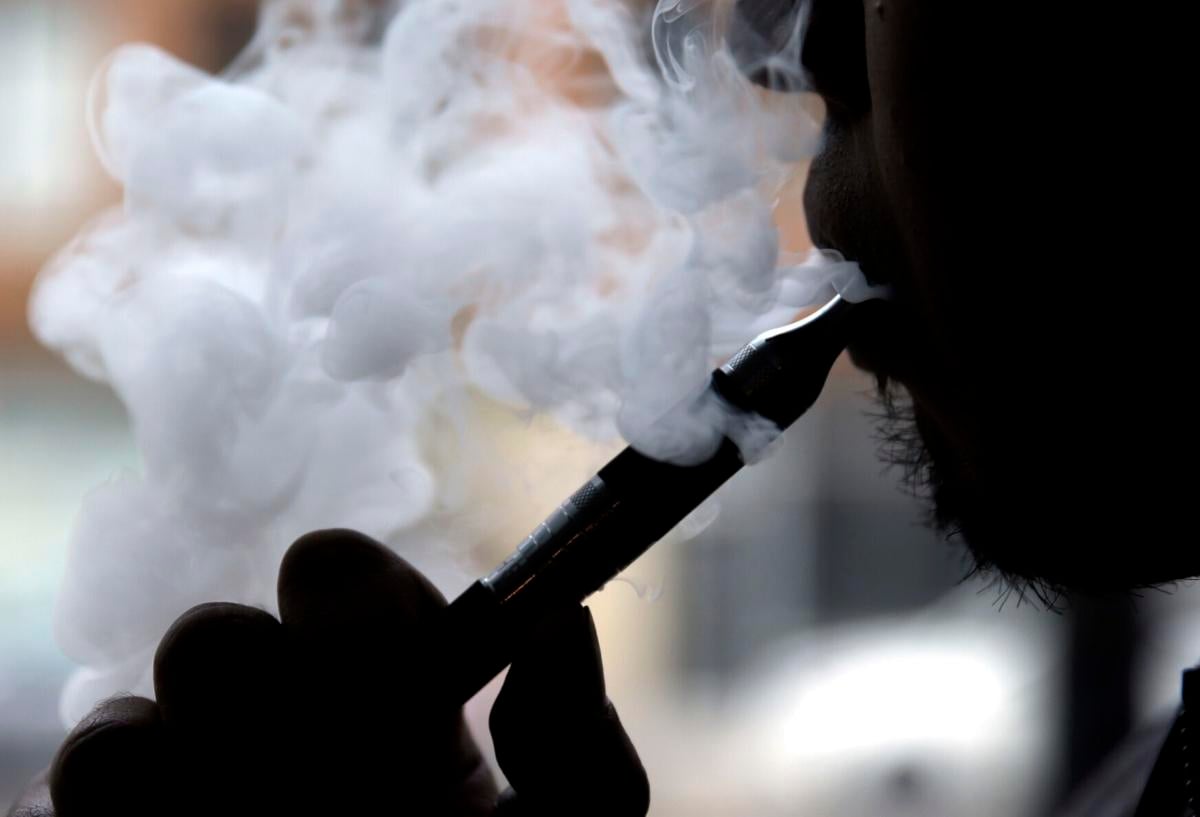
So now the organization is working to line up legislative support — preferably led by a Republican — to expand the levy to also include vaping products containing nicotine.
Barba figures that would translate out to about a 50% increase in the retail prices of those products, potentially raising an additional $100 million a year.
And to sweeten the deal for the lawmakers who would have to approve it, he said First Things First would keep only some of that for its programs — perhaps 60%, though the number is not yet final. The balance, Barba said, would go into the state general fund to support other state priorities.
Making that happen, however, is not going to be easy.
One option is to ask lawmakers to simply amend the 2006 measure. That avoids having to take the issue back to voters who approved the original levy in 2006 by 53.2%
But the Arizona Constitution spells out that the Legislature cannot simply alter what voters have passed. Lawmakers can act only if the change "furthers the purpose'' of what voters originally approved.
An argument could be made that the purpose — early childhood development — remains the same. All that's changing is adding a new funding source.
But that's just the half of it.
That constitutional restriction on legislative tinkering also requires approval of three-fourth of each chamber, meaning 23 of 30 senators and 45 of 60 representatives. That allows the plan to be defeated by just eight senators or 16 representatives.
Another option is to ask lawmakers to create an entirely new tax on vaping products, Barba said.
That avoids one constitutional issue. But it raises another one, albeit not as high: It still takes a two-thirds vote — 20 senators and 40 representatives — to impose a new tax.
Whatever the number, there already are lawmakers who are making it clear they won't support either plan.
Consider what happened earlier this year.
Rep. Consuelo Hernandez, D-Tucson, introduced a measure, backed by First Things First, which would have levied a slightly different tax on vaping products. Barba said that would have raised $80 million a year, with 60% of that going to programs for his organization.
Her bill was assigned to the House Ways and Means Committee. And Rep. Justin Olson, who chairs that panel, refused to even give it a hearing.
"I don't support tax increases,'' the Mesa Republican said. "I came to the Legislature to cut taxes, not to raise them.''
Barba said what needs to happen now is to build a broad, bipartisan coalition to be able not just to get a hearing but also line up the necessary votes, whichever path the legislation takes. But that, he said, also means recognizing the political reality at the Capitol.
"Our goal is to have somebody in the majority party, hopefully, sponsor the bill for us,'' he said, acknowledging that Republicans control 33 of the 60 House seats and 17 of 30 Senate seats.
Like who?
"We have a couple of names,'' Barba said, declining to be more specific.
And there are potential obstructions from business community.
The original Prop 203 was opposed by the , made up largely of major taxpayers in the state. Among the reasons was general opposition to allowing special interests to go to the ballot to create their own laws — and their own revenue stream that they control — outside of the purview of elected state lawmakers.
And now?
Kevin McCarthy, the organization's executive director, said with the policy of taxing nicotine products and the First Things First board already in place, he's not concerned about widening the tax net to also take in vaping.
"I'm more concerned with how the money is spent now,'' he said.
Also a player in anything involving taxes is the .
"We tend to oppose taxes because we believe the private sector, whether it's families or job creators, tend to know how to make better use of their money than government,'' said Danny Seiden, executive director of the organization.
But he acknowledged there are other factors to consider — factors he said are based on the fact that, since the original bill was passed, he became a parent and came to understand many of the burdens placed on parents.
"There are services that we count on the government to provide and need to fund,'' Seiden said.
"Our folks are good corporate citizens,'' he said. "They're willing to invest in the community.''
Seiden said the real opposition to what's being proposed is going to come from the companies that making vaping products, many of those owned by the same tobacco companies who unsuccessfully tried to defeat the original Prop 203.
A spokesman for one of the companies said it would have no comment until there is a final version of what First Things First is proposing. But Seiden said his conversations with industry officials suggest they're willing to talk.
"I'm willing to bet they would meet in the middle on some kind of fee on vaping,'' he said.
"They want to be seen as a charitable solution to what's happening,'' Seiden said. "They don't want to be seen as a sin tax anymore.''
If proponents can get a plan through the Legislature, the last obstacle would be Gov. Katie Hobbs who would have to sign it.
"I think that funding goes to a really important purpose,'' she said. "We knew that if tobacco prevention programs were successful that that funding would decrease.''
What's also a factor, the governor said, is the state is facing "a stretched budget and a lot of uncertainty,'' making dollars from general tax revenues scarce.
"We have to look at all the ways possible to keep funding programs that Arizonans rely on and want,'' she said.
But Hobbs would not commit to signing a bill whose provisions she has not yet seen.
Howard Fischer is a veteran journalist who has been reporting since 1970 and covering state politics and the Legislature since 1982. Follow him on X, formerly known as Twitter, , and Threads at @azcapmedia or email azcapmedia@gmail.com.