PHOENIX — State senators gave preliminary approval to what proponents say would be the first guardrails on the use of automated license plate readers by police in Arizona.
Peoria Republican Sen. Kevin Payne, who wrote the proposed legislation, told colleagues Wednesday there is nothing currently in law that governs the use of the cameras nor what law enforcement can do with the data, including who can access the information and how long they can keep it. Payne said his plan would set some limits on when the cameras can be used and who can access the data.

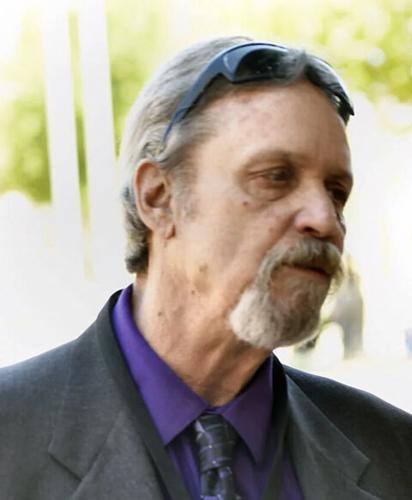
Sen. Kevin Payne
But Queen Creek Republican Sen. Jake Hoffman said the proposal, Senate Bill 1111, is so full of loopholes that someone "could drive a Mack truck'' through it.
Enacting the bill into law with all the exceptions it would allow would amount to a license for wholesale government surveillance of Arizonans, Hoffman said.
People are also reading…
He instead offered up what amounted to an outright ban on using license plate readers. His proffered amendment would have allowed the readers to be used only to track government vehicles — and only if they could not view anything on public streets.
Hoffman got no support from any of his GOP colleagues, although Senate Democrats shared his fear of misuse.
With the other 16 Senate Republicans in unanimous opposition to Hoffman's amendment, Payne's bill was given preliminary approval.

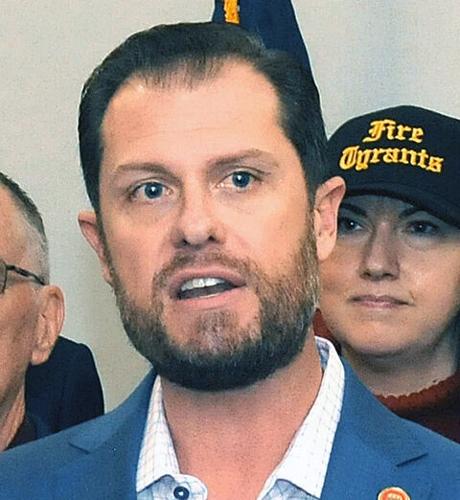
Sen. Jake Hoffman
Could fall 1 vote short
What will happen next is unclear, however.
Mesa Republican Sen. David Farnsworth agreed to vote for preliminary approval and against Hoffman's efforts. But Farnsworth said he considered the preliminary vote to advance SB 1111 to be strictly procedural and one where he was aligning himself with GOP leadership.
He told Capitol Media Services he is "uncomfortable'' with SB 1111 as it is now written and has heard from constituents who are concerned.
He made no commitment to supporting the Payne version when it comes up for a final roll-call vote.
If Farnsworth balks, that would leave the measure one vote short of a majority.
Payne countered opponents by saying if SB 1111 is killed, there will be no protections for Arizonans on the issue.
That would mean no regulations on state and local police who now use the cameras made by Flock Safety Systems 24/7. The cameras can provide instantaneous alerts when a specific vehicle is being sought, and they retain data for 30 days, enabling law enforcement to trace a specific vehicle's movements.
Hoffman said what's in SB 1111 is worse than no bill at all. If it dies, that opens the door to crafting a new proposal, one with better protections, he said.
Broad support for some limits
There appears to be broad support for setting up some limits on the government's use of automated license plate readers, as none now exist in state law.
Early versions of the bill, supported by police, had only minimal controls, like how the data collected must be stored, who can access it, as well as penalties for unlawful disclosure.
Payne, seeking to pick up support, proposed amendments to include a requirement for use for "legitimate'' law enforcement purposes and having the data stored in a password-protected system.
That still left some legislators uneasy. So Payne added some additional restrictions Wednesday, such as requiring a warrant or subpoena for any data more than 48 hours old.

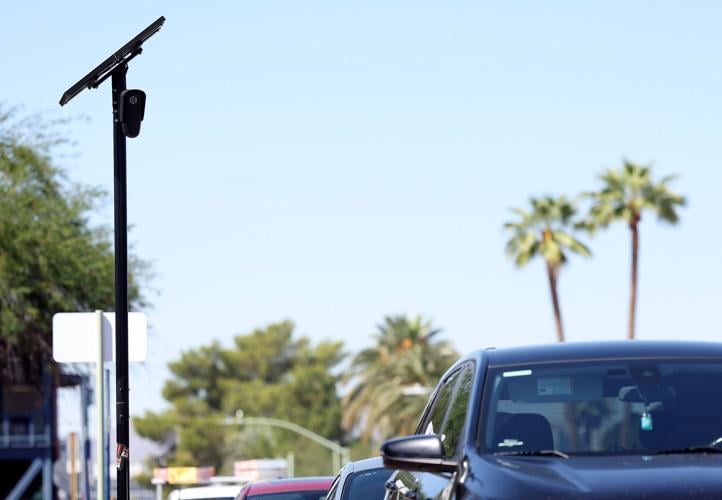
A Flock Safety camera stands along Second Street west of North Campbell Avenue on the University of Arizona campus.
But Hoffman said there would be exceptions, such as when a vehicle is reported lost or stolen.
"Does that then give law enforcement only the ability to track and target that one license plate?'' Hoffman asked. "Or does it allow them to track every license plate once a vehicle is reported stolen in hopes of finding the stolen vehicle?''
There would also be an exception for "exigent circumstances.''
"'Exigent circumstances' is a big-old catch-all term,'' Hoffman said. "And that's going to allow them to claim exigent circumstances on almost everything.''
Another exception would be when police are looking for information on sex trafficking or human trafficking.
"No one in America wants to help those people,'' Hoffman said. But he said such incidents are occurring daily, if not hourly, and police departments are having entire task forces devoted just to those issues.
"That means that these automated license plate readers are constantly running and the data is constantly and continuously being accessible by law enforcement and by the company,'' he said.
'Surveillance state' opposed
According to Hoffman, the problems go beyond the exceptions. He said what the bill would authorize by law shreds the protections of the Fourth Amendment and its limits on search and seizure.
"Our founders did not flee tyranny only to build a surveillance state of their own,'' Hoffman said. "They understood that a government that watches everything controls everything.''
He compared allowing this kind of monitoring — and, with SB 1111 giving it government imprimatur — to the massive Patriot Act passed by Congress in the days after the Sept. 11, 2001 attacks in hopes of providing more security. It included short-cuts for getting warrants and the bulk monitoring of phone calls, something that remained in place until it was declared illegal in 2015.
As to what's in SB 1111, Hoffman said it "would allow law enforcement to track citizens' movements,'' which he said his rejected amendment would have precluded.
But Senate President Warren Petersen said the version Payne offers provides a good balance between the need for the information, and safeguards against abuse, including the need for warrants in most cases and making improper disclosure a felony.
"We want this data to be used to save lives,'' such as when a little girl is kidnapped, Petersen said.
"Time is of the essence,'' the Gilbert Republican said. "We also want it to stop violent crimes.''
Democrats, who voted en masse against the bill, had concerns of their own.
"I feel it sets the stage for secret police,'' said Sen. Mitzi Epstein, a Tempe Democrat.Â
"Without a good definition of what is a legitimate law enforcement use, this is very dangerous,'' she said. "It could be used for any number of things that would be awful, including tracking somebody who purchased a firearm or tracking somebody who had an abortion.''
There are reports that law enforcement in Texas tapped into Flock Safety cameras nationwide to track a woman they claimed had a self-administered abortion.
Petersen, however, said the alternative is worse: having none of the regulations that SB 1111 would enact.
"It will allow mass surveillance with no accountability, with no warrants, and with no Class 6 felony for misuse,'' he said.
Hoffman still insisted that's no excuse for adopting what Payne is offering. "Government doing 'something' poorly is why people mistrust the government,'' he told Capitol Media Services later in a written statement.Â
Hoffman said there are better alternatives.Â
"Since before the (legislative) session began I've been working with privacy and civil liberties stakeholders on a real solution to rein in the unconstitutional and unlawful surveillance of Arizonans by a handful of tyrannical cities," he said after the debate. If the bill in its current form dies — as he thinks it ultimately will — Hoffman said he will work to introduce new legislation that will "properly protect our constituents civil liberties.''
Howard Fischer is a veteran journalist who has been reporting since 1970 and covering state politics and the Legislature since 1982. Follow him on X,  and Threads at @azcapmedia or email azcapmedia@gmail.com.


 'Surveillance state': Groups ask U of A to stop using cameras that read license plates