PHOENIX — The lone incumbent seeking reelection this November to the state's utility regulatory agency is defending the panel's decisions to cut programs that encourage use of renewable energy and to eliminate most rebates for energy efficiency purchases.
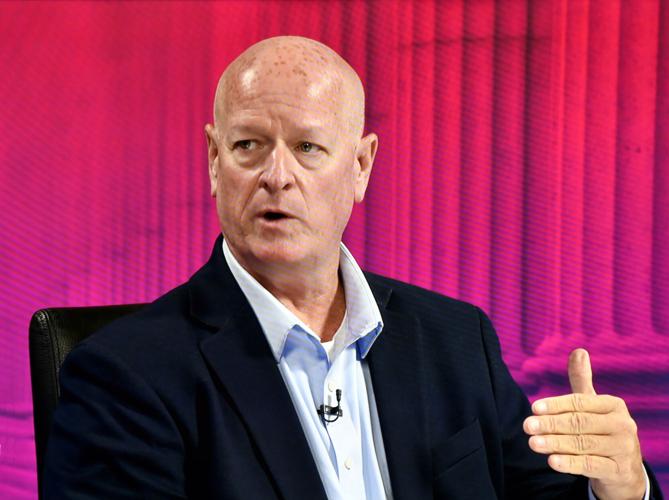
Republican Corporation Commissioner Kevin Thompson said he has nothing against solar, but the technology has not yet come far enough to make it reliable — even in a state with so much sunshine.

Kevin Thompson
"Battery technology is not where it needs to be to cover nighttime,'' he said during a televised debate Tuesday at KAET-TV, the Phoenix PBS affiliate, among candidates who are running for the two open seats on the five-member Arizona Corporation Commission. The seats of three Republican incumbents are not up for election this year, and a fourth Republican incumbent lost his race in the GOP primary election in July. Â
People are also reading…
On the solar reliability issue, Thompson pointed to a dust storm that hit the Phoenix area last year about 3 p.m. one afternoon, the beginning of peak electricity demand time. He said Arizona Public Service and Salt River Project, the two utilities that serve the area, lost more than 2,000 megawatts of solar power, which Thompson said is the equivalent of one of the three units at Palo Verde Nuclear Generating Station going offline.
"And they had to go to the natural gas 'peakers' to keep the grid up and running,'' Thompson said, referring to power plants that can be easily turned on to meet peak needs, albeit with natural gas, which is a fossil fuel. What Thompson did not say, though, is that if Arizona did not have solar energy, utilities would have had to run their regular power plants to replace that electricity. Â
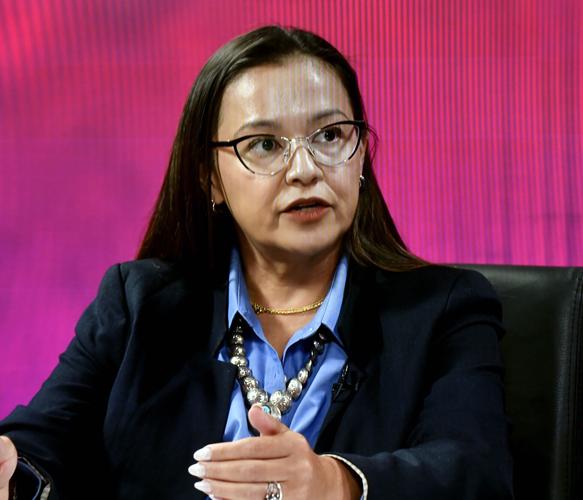
Democratic candidate Clara Pratte said the commission should push utilities to pursue more electricity from solar. The key is affordability, she said.
"Right now, solar energy is the cheapest form of energy on the market,'' said Pratte. She is the co-founder of Navajo Power, which works with tribes to develop renewable energy.
Pratte said she is not opposed to an "all-of-the-above'' approach to energy sources. But she said the emphasis should be on renewables "versus being dependent on imports that are coming into our market.''

Clara Pratte
"With solar, we can be generating our own energy and become energy independent at a time when we need extra energy,'' Pratte said.
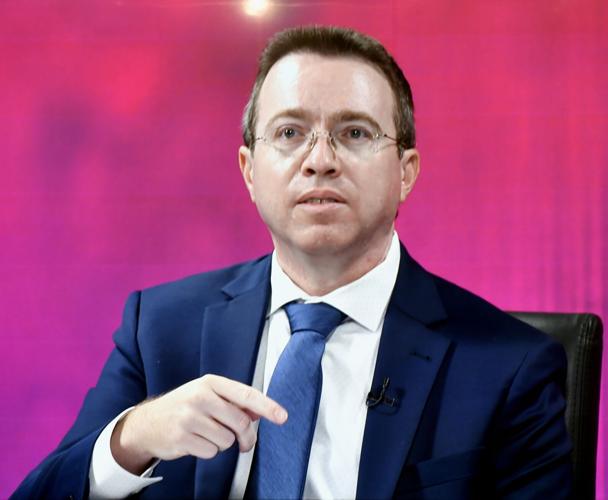
Fellow Democrat Jonathon Hill said he, too, believes the commission should be pursuing "balance.''

Jonathon Hill
"But they also shouldn't be putting their thumb on the scale,'' Hill said. That means not promoting one source over another and also not creating disincentives for people to pursue renewable energy, he said.
He pointed out that the commission just last month allowed two utilities to reduce what they pay customers who have rooftop solar for the amount of excess electricity they generate into the grid.
Thompson defended that decision.
"Ratepayers were subsidizing other ratepayers to have solar on their house,'' he said. Thompson argued that was not fair because it wasn't helping lower-income people who need the most financial relief.
"Right now the only people purchasing rooftop solar are the middle- and upper-middle-class individuals that can afford it. And it's the low-income and fixed-income folks that are subsidizing that,'' Thompson said, through higher rates the commission allowed utilities to charge to make the payments to solar users.
Hill responded that if Thompson and his fellow Republican commissioners are so interested in helping those on limited incomes, the panel would not have voted in July to repeal a separate set of energy efficiency rules that provided breaks to customers who purchased things designed to save energy, "to do the things that will ultimately drive utility costs down.''
Thompson said the decision was the result of the commission reviewing energy efficiency programs that had been in place for decades without being evaluated for how effective or useful they were at achieving their goals.
Some, he said, made no sense.
"We were subsidizing homebuilders to install energy efficient appliances,'' Thompson said, to the tune of $250 million a year, all paid for from surcharges on rates paid by utility customers. "Can we even find a non-energy-efficient appliance nowadays? No.''
Ditto, he said, of paying customers to install shade trees.
Anyway, Thompson said, the commission did not eliminate everything, keeping programs that paid customers for steps such as installing weatherstripping, insulation and high-efficiency air conditioning units, "the things that actually make an impact on people's bills.''
Pratte did not dispute that the cost of utility programs designed to improve electric efficiency have been passed on to all customers. But she called it minimal.
For example, Tucson Electric Power in 2024 estimated the average customer's monthly bill went up about $2.31 a month for that reason. But the utility said the reduction in power usage benefited customers because it allowed TEP to postpone or avoid the need to build new power plants and help it reduce reliance on fossil fuels.
Pratte said that price tag is worth paying.
"The long-term impact of those energy efficiency standards were really impactful in saving money in the long term,'' she said. "That's where we have a difference of opinion on what is effective and what is not.''
Debate moderator Ted Simons asked Thompson about claims by proponents of the energy efficiency standards that they helped stabilize utility bills, stabilize grid reliability, and reduce pollution.
Among proponents making those claims is current Democratic Attorney General Kris Mayes, who, as a Republican on the Corporation Commission in 2010, helped create the standards in the first place.Â
Thompson sniffed at the assertion. "I think if you look at it, the people who were behind that were the people who were making money off of those programs,'' he said. "Again, it wasn't helping the people that it was intended to help.''
The decisions to scrap the programs were shared by Commissioner Nick Myers who, like Thompson, ran for reelection this year.
Myers, however, was not at the Tuesday event to defend his votes. That's because in the Republican primary in July, while Thompson placed first among the three contenders for two slots on the November general election ballot, Myers ran third behind state Rep. Ralph Heap.
Heap also was not at the Tuesday event and has declined to participate in debates. Also, he's under investigation by the Citizens Clean Elections Commission, which says he failed to disclose money spent buying campaign signs before he got certified to receive public funds for his campaign.
Separate from questions of commission policies, Thompson defended meeting with financial executives in New York, companies that may have a financial interest in utilities.
"Otherwise, I think we'd be derelict in our duties by not trying to understand what the investment community is looking at when they want to come into Arizona,'' Thompson said. "We want New York and Wall Street to invest in our utilities,'' he said, because that will give the utilities access to "cheap capital'' that holds down borrowing costs and, by extension, utility rates.
He said he would never meet with someone who had a pending matter before the commission, however.
Hill, however, said it is impossible for someone in that situation, tasked with regulating utilities, their policies, and what they charge customers, which can affect their profitability, to truly be impartial.
"Under no circumstances should a sitting commissioner be meeting with financial interests behind the investors in these utilities,'' Hill said.
"If you think about it, all the ratepayers, all the regular customers out there, they don't get to meet with those people outside of the commission,'' Hill continued. "They don't have special access. So for the commissioners to give them special access to decision makers who are elected, I think it is always inappropriate.''
Pratte said it is possible for commissioners to reassure investors — if done properly.
"I think that you do that in sunshine, you do that in public, you do that through the process that's laid out before us,'' she said. "You don't meet behind closed doors and compromise your impartiality in meeting with these entities.''
Howard Fischer is a veteran journalist who has been reporting since 1970 and covering state politics and the Legislature since 1982. Follow him on X,  and Threads at @azcapmedia or email azcapmedia@gmail.com.