The following is the opinion and analysis of the writers:

J.J. Lamb

Helen Erickson

Gerald Lamb
Last Saturday, three of us, with a 2-year-old in tow, stood on the edge of South Houghton Road and peered west across a fenced area of desert toward a majestic view of two peaks of the Tucson Mountains. This view has guided people from time immemorial from the watershed of Cienega Creek to the valley of the Santa Cruz. We were there to trace the route of the Butterfield Overland National Historic Trail, a route constructed on the eve of the Civil War to link the eastern and western parts of our young country. The trail ran from St. Louis and Memphis in the East to San Francisco in the West. Four hundred miles of the trail crossed Arizona. We were observing its path through Pima County.
Understanding how the Southwest was woven into the American story requires a hard look at the short-lived Butterfield Overland Mail. A compromise to stitch together new states and territories in the wake of the Mexican-American War, this trail expanded American influence west beyond the Mississippi and carved a path that all future transportation developments would follow.
People are also reading…
John Butterfield of upstate New York had extensive experience in the operation of stage lines, canals, and railroad lines, and in 1857, he won a contract to provide semi-weekly mail service for the fledgling United States. The stages covered approximately 2,795 miles in an astounding 25 days.
Although the mail service lasted only two and one-half years from 1858-61 — ending at the beginning of the Civil War — the trail guided the California Volunteers as they marched east to dislodge the Confederacy. Until the coming of the railroad in 1880, it remained the major transportation route across southern Arizona. The route Butterfield created remains one of the most intact historic transportation corridors in Arizona and a cultural asset far more valuable to Pima County than any short-term industrial project.
The road from the Seneca Station to Tucson remained etched on the ground, on the 1899 Government Land Office Survey map and on the 1904 USGS map as a main road. Its continuing presence has also been confirmed by independent group surveys during the past few years. The historic road crosses the northeast corner of the parcel proposed for the Project Blue data center, oriented directly toward the iconic landmark view of the Tucson Mountains.
Precontact and Butterfield-era artifacts remain along the alignment.
Looking west along the trail, it is easy to feel a strong sense of history. One can imagine the sounds of wagon wheels rumbling, the sharp clatter of their metal-clad wooden wheels rolling over rocky soil. The wind seems to carry the sounds of mules and horses pulling against the constraints of their creaking leather harnesses, keeping the strict, unyielding schedule that shrank communication across a vast landscape from months to weeks.
This landscape shares a story too significant to our place in history — and to our national story — to be clear-bladed into silence.
The Butterfield Overland Trail was designated as a National Historic Trail in 2023, and we feel that our section of the trail offers a precious tangible reminder of Arizona’s role in our national story. Rather than cede this land to an ecologically questionable project, we believe the route should be developed as a connecting segment of a multi-use trail linking The Loop to the Arizona Trail, to the historic Seneca stage station, the Pantano railroad site, and to the 2,795 miles of this historic trail that links seven states. Heritage and eco-tourism are among the least extractive economic undertakings. In 2023 alone, 45.7 million visitors spent $29.3 billion in our state, and most sought out the heritage landscapes — national parks, state parks, tribal cultural sites, and historic corridors — that define Arizona’s sense of place.
Preserving this trail alignment honors our history, strengthens our tourism economy and offers a sustainable and community-serving alternative to a project with serious environmental costs.
Follow these steps to easily submit a letter to the editor or guest opinion to the ÃÛÌÒÓ°ÏñAV.
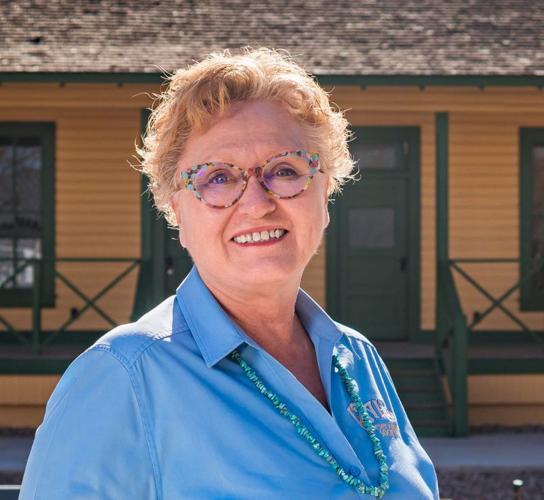
J.J. Lamb is President of the Vail Preservation Society. Helen Erickson teaches preservation planning at the University of Arizona. Gerald Lamb is a filmmaker, educator and Special Projects Curator for the Vail Preservation Society.