NEW YORK — Jon Stanley considers himself fortunate among bipolar disorder patients. He eventually responded to the right drug cocktail after self-described “full-brained mania� almost 40 years ago left him naked in a New York City deli, convinced electricity coursed through the floor.
Others face a longer road to medication. Severe mental health care like his was “more art than science,� the retired lawyer remembered being told back then. Doctors would rotate through medicines to “see if anything stuck.� The experience inspired his late parents, Ted and Vada Stanley, to donate hundreds of millions of dollars toward research into treatments for bipolar and schizophrenia during their lifetimes.

A portrait of Ted and Vada Stanley hangs in the lobby of the Broad Institute, which houses the Stanley Center for Psychiatric Research, on March 17 in Cambridge, Mass.Â
Now, their philanthropic legacy continues with a renewed gift for a biomedical collaborative working to understand such diseases and identify therapies. The Stanley Family Foundation announced another $280 million for the Stanley Center for Psychiatric Research at Broad Institute earlier this month, bringing its total contributions to the Massachusetts-based nonprofit over $1 billion.
People are also reading…
The dedication reflects both their belief in its unique team-based approach and Jon’s fidelity to his billionaire retailer father’s desired application of the wealth he amassed selling collectibles.
“He said he wanted his ‘Manhattan Project,’� Jon recalled. “And so, the only question was: who was gonna be Oppenheimer?�

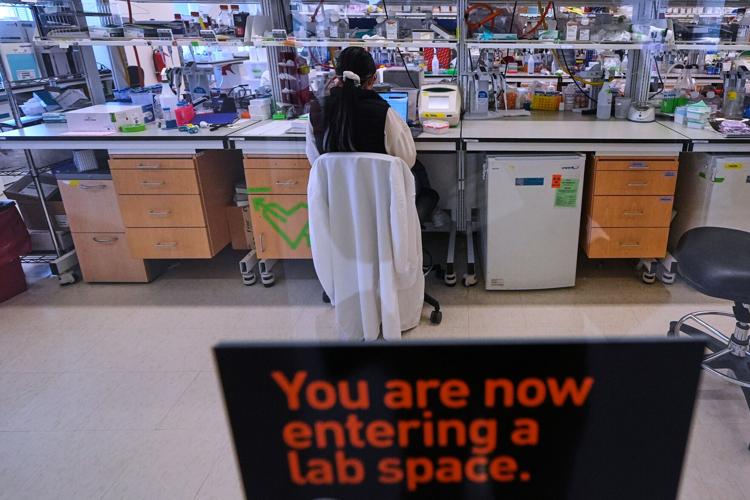
A scientist works in the Stanley Center for Psychiatric Research laboratory space at the Broad Institute on March 17 in Cambridge, Mass.
The Broad Institute launched in 2004 to tackle disease research with the combined forces of faculty from MIT, Harvard and other scientists. It has attracted prominent philanthropists, including founding donors Eli and Edythe Broad, as well as former Google CEO Eric Schmidt and his wife, Wendy.

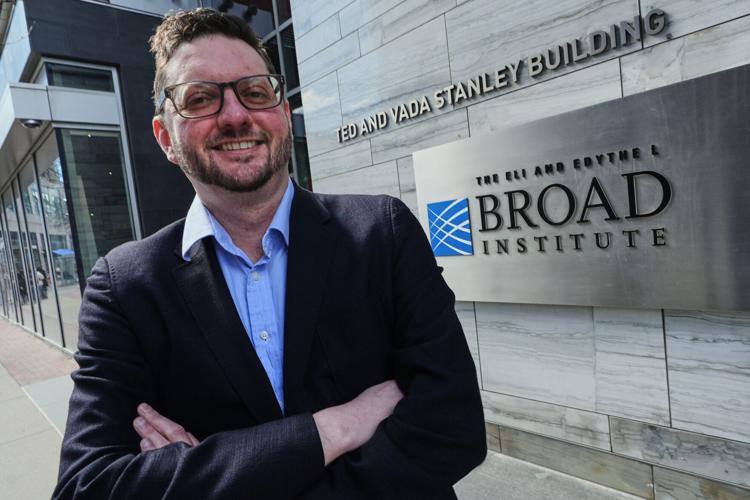
Benjamin Neale, co-director of the Stanley Center for Psychiatric Research, poses for a portrait at the Broad Institute on March 17 in Cambridge, Mass.Â
The Stanleys' giving has gone almost exclusively to the Broad Institute — a staggering commitment to one recipient. This latest unanticipated gift funds another seven years of its work to determine how these illnesses develop. By using rapid advancements in DNA sequencing, the goal is to accelerate new interventions, according to the Broad Institute's Stanley Center for Psychiatric Research co-director Ben Neale.
“We’ve made major discoveries of genes that dramatically increase the risk of developing these illnesses," Neale said. “We know we only have a small fraction of what is out there to be discovered.�
Jon grew up along the Connecticut coast as father's consumer products company, MBI, grew more successful. The money, he said, “kept getting bigger.� But Jon's father informed him early on he'd give most of the fortune away.
A focused philanthropic outlet came when his son developed bipolar disorder at 19. Jon first experienced mania at a London educational program while attending Williams College. He harbored dreams of making millions by setting up student housing for Americans studying abroad. But he quickly spent all his money, flipping from mania to depression.

Here are some celebrities who’ve been open about their mental health, even when it would’ve been easier to stay silent. Let’s start with Zenda…
The mania worsened when he returned to his liberal arts school campus in Massachusetts. He freaked out his girlfriend on a New York City visit with comments about secret agents following him. After three days wandering Manhattan without any money, he wound up in a deli where his body hurt from imagined electric shocks he felt jumping onto him.
“So, I did the logical thing: I took my clothes off. And that’s how the cops found me," Jon said.
He stayed six weeks at a psychiatric hospital in 1987, occasionally spending time in the “rubber room.� Lithium, which he'd already been prescribed, didn't work alone. The addition of an anticonvulsant called Tegretol did the trick.
Neither drug was developed to treat bipolar. Nor did doctors have the genetic understandings of the disease they do now — such as its common risk factors with schizophrenia, an insight driven by the Broad Institute.
Jon's parents wanted to change that.
Still, Jon said, his dad didn't “just start writing checks everywhere.�
His parents first founded the Stanley Medical Research Institute. As Ted aged, however, Jon said he decided to give nearly everything to the Broad Institute. Ted had become frustrated with academic research models where professors string together grants, working separately on similar causes that fall within a funder's interests. He wanted to put all his eggs in one basket.
“We give all the money to Broad and they’re all looking at the one problem,� he said. "It’s much more like a wartime economy.�
His father devoted $825 million altogether. But the stock market, where he'd invested his philanthropic funds, performed better than expected. There was additional money to commit.
Jon, one of three Stanley Family Foundation trustees, held no reservations about Broad receiving even more. He considers it his obligation to do "what my dad would want if he was here.�

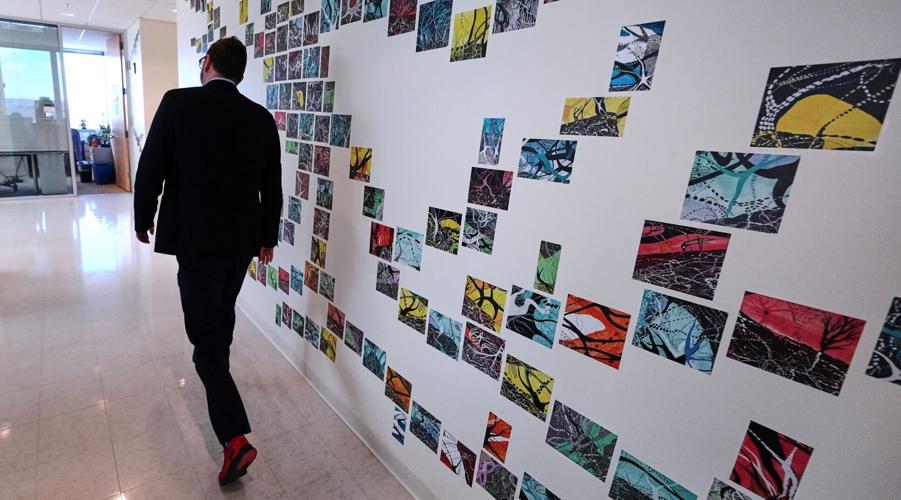
Benjamin Neale, co-director of the Stanley Center for Psychiatric Research, walks through the laboratory Marh 17 at the Broad Institute in Cambridge, Mass.Â
“He didn’t think he needed all that he made." Jon said. "But he was very interested in making more so he could give it away. So, who am I to overrule what he thought?�
Funding to understand and treat mental illness might appear robust. However, experts caution the combined support from the government, private industry and philanthropy pales in comparison to the burden caused by diseases such as bipolar disorder.
The federal government provided more than $2 billion annually for mental health between 2019-2024. But studies show schizophrenia alone costs the U.S. more than $300 billion a year — partially due to fragmented care systems that don't treat people proactively enough, according to Sylvie Raver, a senior director at the Milken Institute’s Science Philanthropy Accelerator for Research and Collaboration.
Raver said there's been a decline in support for serious mental illness at the National Institutes of Health. The existing funding, according to Raver, can be siloed and isn't necessarily targeted toward the needs of impacted families like the Stanleys.
“When you marry capacity, like what the family has, and understanding and personal resonance with the topic, like they have as well, philanthropy is really primed to do exciting things," said Raver, who leads brain disease and mental health portfolios.
10 ways Mental Health Awareness Month has made a difference—and how you can get involved
10 ways Mental Health Awareness Month has made a difference—and how you can get involved

When Mental Health America established Mental Health Awareness Month in 1949, few could have predicted its profound impact. What began as a modest educational effort has evolved into a national movement that has fundamentally altered how we perceive, discuss, and treat mental health conditions.
For over 70 years, each May has put a spotlight on mental health issues through community events, media campaigns, and educational outreach. But beyond the green ribbons and hashtags, has Mental Health Awareness Month actually made a meaningful difference? The evidence suggests a resounding yes.
To highlight the concrete ways that this annual tradition has championed the nation's mental well-being, checked in with Vivian Chung Easton, a mental health clinician at the therapist-enablement technology platform. She offers 10 ways this annual observance has transformed our approach to mental health—and how you can participate in continuing this important work.
The 10 Biggest Ways Mental Health Awareness Month Has Made a Difference
1. Reduced Stigma
According to an American Psychological Association 2019 , 87% of American adults now believe having a mental health disorder is nothing to be ashamed of—a dramatic increase from just 54% in 1996. This transformation represents millions who no longer view mental health challenges as character flaws.
2. Normalized the Discussion of Mental Health Conditions
National Institutes of Health have shown that the percentage of adults who believe people with mental health conditions can lead normal lives increased from 69% in 1996 to 91% in 2019. This reflects a growing understanding that mental health challenges don't define a person's potential.
3. Increased Number of Americans Seeking Support
As awareness has grown, so too has the number of folks taking steps to receive care. According to Centers for Disease Control , the percentage of Americans receiving mental health treatment increased from 13.4% in 2002 to 20.3% in 2020—representing millions more accessing care.
4. Improved Insurance Coverage
Since the Mental Health Parity and Addiction Equity Act passed in 2008, over 82 million Americans have gained better insurance coverage for mental health services. This legislation requires insurers to cover mental health conditions at the same level as physical conditions.
5. Enhanced School-Based Education
As of 2023, 37 states have passed legislation , compared to just 8 states in 2000. These programs teach students to recognize warning signs, develop coping strategies, and know when to seek help.
6. Transformed Workplace Support
According to Benefits News , 86% of large employers now offer mental health resources, up from just 31% in 1999. From employee assistance programs to mental health days, employers increasingly recognize that supporting mental wellness isn't just compassionate—it's good business.
7. Increased Media Coverage
Howard University's Howard Magazine that media coverage of mental health topics increased by 43% between 2010 and 2022, with a notable spike each May. This visibility helps normalize conversations about mental health and exposes millions to accurate information.
8. Amplified Social Media Engagement
According to from the International Journal of Medicine and Public Health, social media mentions of #MentalHealthMatters grew from 2.3 million in 2013 to over 19.7 million in 2023. This online conversation has created communities and opportunities for people to share experiences and find solidarity.
9. Boosted Research Funding
Congressional records show that NIH funding for mental health research increased from $1.4 billion in 2000 to $3.2 billion in 2023. Mental Health Awareness Month advocacy efforts have helped maintain public pressure to prioritize this research.
10. Expanded Evidence-Based Interventions
The Substance Abuse and Mental Health Services Administration (SAMHSA) just 35 evidence-based mental health interventions in 2000; by 2023, that number had grown to over 160. This means more personalized, effective options for those seeking help.
How To Get Involved This Mental Health Awareness Month
While progress has been remarkable, the work isn't finished. Blueprint's mental health expert Easton suggests some meaningful ways to participate this May:
Share Your Story: If you're comfortable, share personal experiences to help others feel less alone. Sharing can be cathartic for you as well, but when telling your story, it can be helpful if you focus on the important takeaways of your experience, not recounting every detail. This can also take the form of reaching out to those who may have supported you in your journey to share your gratitude and let them know what a difference they made.Â
Educate Yourself and Others: Learn about mental health conditions through reputable sources and share knowledge. It's important to take a critical eye toward where you're getting your information to ensure it's based in fact, and that any advice makes sense for your life. From Tiktok "therapy" to any claims without evidence to back them up, keep an eye out for any potentially false information and prioritize sources like the Cleveland Clinic or the National Institutes of Health.
Support Mental Health Organizations: Consider donating time or money to frontline mental health organizations.
Advocate for Policy Changes: Contact representatives about mental health policies that matter to you.
Practice Mental Health Allyship: Hold space for connecting with others in your life, and take action to show them you care. From sending them a text message or even a coffee to let them know you're thinking of them to inviting them out for a walk together, creating a space to truly listen without judgement is a powerful way to help them feel heard and validated.
Prioritize Your Own Well-being: Use this month to take a moment for yourself. Filter out the noise, and look inward to ask yourself what mental health looks like for you? How can you support your mental health in your day-to-day life: whether it's taking time for yourself, going to therapy? Giving yourself a chance to assess what it means to prioritize your mental health doesn't have to look like one thing—it's what makes sense to you in the moment to feel whole.
Looking Forward
Mental Health Awareness Month serves dual purposes: celebrating progress that we've made together, while reminding us of the journey ahead. By participating this May, you join a movement that has already improved countless lives. And in building that momentum together, we can continue to transform how our nation views and treats mental health.
If you're experiencing a mental health crisis, call or text 988 to reach the Suicide and Crisis Lifeline, available 24/7.

was produced by and reviewed and distributed by Stacker.