CHANDLER — The University of Arizona is opening what it calls the nation’s first-ever medical school branch offering a Doctor of Medicine MD degree on the land of a tribal nation where students can get a tuition-free education, although a UA administrator said there aren’t enough Native American students enrolling.
The UA offers a three-year accelerated MD program at its medical colleges in Tucson and Phoenix, and the Phoenix college has recently been expanding branches into specific regions of the state.
The UA announced a medical school branch in Yuma in December 2025, along with Onvida Health, while this second branch, announced Tuesday, will be in the Gila River Indian community in partnership with Gila River Health Care, the community’s tribally operated healthcare system.
People are also reading…

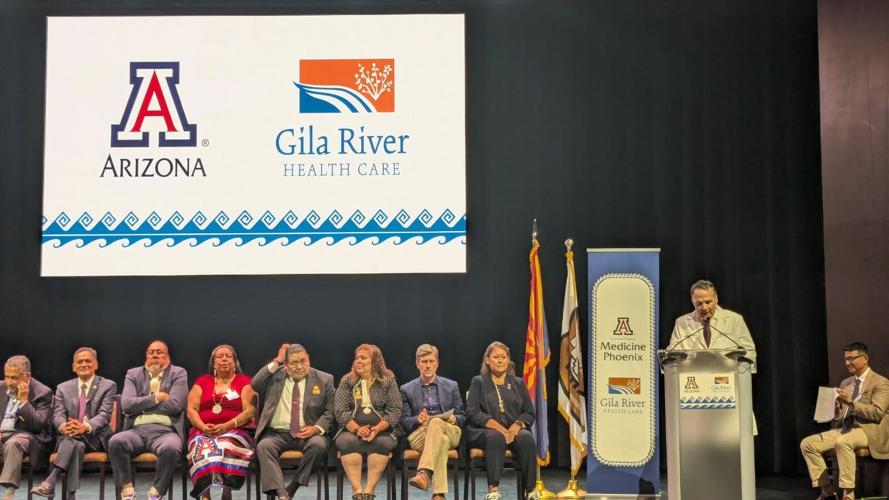
Fredric Wondisford, dean of the University of Arizona College of Medicine – Phoenix, speaks Tuesday in Chandler at a UA event announcing a new MD-granting medical school branch in partnership with Gila River Health Care.
Fredric Wondisford, dean of UA’s College of Medicine — Phoenix, said there are “sadly not enough� Native American students selected to be part of UA’s three-year MD-granting Primary Care Accelerated Program because not enough applied.
However, Wondisford said, by training future physicians through this branch and this program in communities that need it the most, the UA is increasing the likelihood graduates will choose to practice and build their careers there.
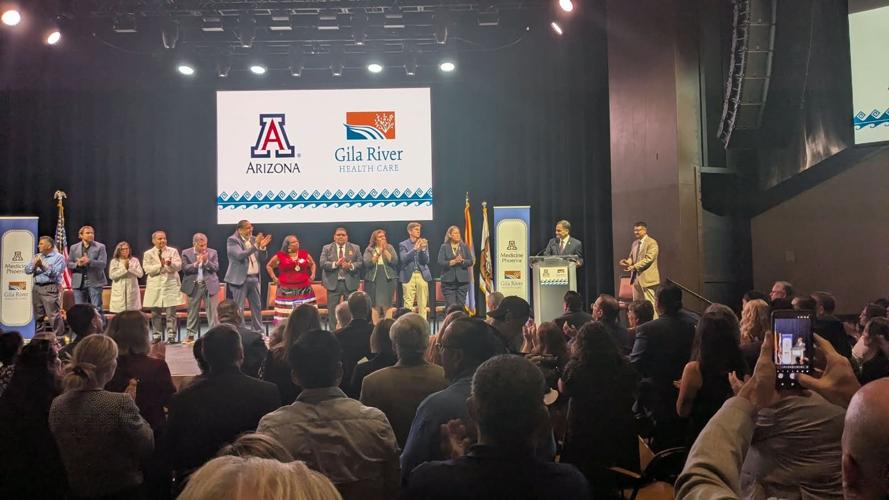
“This branch campus will create a seamless pathway from medical school to residency training and ultimately to clinical practice,� he said in his speech at the official UA event announcing the partnership. The event took place Tuesday at the Gila River Resorts & Casinos in Chandler and brought together almost 300 attendees from the UA, Gila River Health Care, Gila River Indian Community, the Arizona Board of Regents and local elected officials.
“Equally important, our students will become part of this community,� Wondisford said. “They will learn firsthand about the historical, cultural, social factors that influence health and well-being here, (and) develop the understanding and relationships that are essential for delivering exceptional care.�
He told the Star Tuesday that the issue of fewer Native American students is a “pathway problem.� The number of Native American students who graduate from college is small, he said.
“The best Native American students get offers everywhere, full scholarships everywhere,� he said. “So, it’s really a competition with the Ivy Leagues — they can go anywhere, literally anywhere. So, if there are a few in Arizona, we’re hoping that if we reduce the financial burden, eliminate it, we’ll start to attract those type of students. Because if we don’t have that, they’re probably not going to come to Arizona, because they have options everywhere else.�
Wondisford said any and all students who have a college degree can apply to be in the three-year accelerated MD program at the UA, which will welcome its first class of students in July next year.
The Gila River branch will bring in 30 students, 10 each year. Gila River Health Care will invest more than $25 million through 2034 to establish and support the branch, including faculty positions, student scholarships and educational infrastructure.
Students will do the first 18 months of their “foundational medical education� in Phoenix before moving to Sacaton, the capital of the Gila River Indian Community, for the last 18 months of the program. Different from having to do traditional clinical rotations, the students will work under faculty supervision to care for patients across a wide range of clinical settings.
Wondisford said the three-year accelerated MD program in Yuma and now in Gila River is focused on primary care in the two communities, and so students interested in internal medicine, pediatrics or family medicine can apply like any other medical student.
Wondisford said UA officials want to see how well the Yuma and Gila River cohorts are functioning and if students are showing interest and being retained before expanding to add more students. And while Gila River Health Care is investing in the student tuition scholarships for this new branch, he said the UA has more costs to undertake on its end for things like maintaining simulation labs, anatomy labs and doctoring suites.
UA and Gila River Health Care leaders are hoping this branch inspires more Native American students to come into medicine, while also “strengthening long-term pathways into Arizona’s physician workforce.�

University of Arizona President Suresh Garimella speaks at the UA announcement Tuesday of a new medical school branch in partnership with Gila River Health Care.
“I think this is the best, most efficient, most cost-effective way to address the physician shortage across the country, across Arizona for sure,� UA President Suresh Garimella told the Star after Tuesday’s event. “Building an all-new medical school is one thing. It costs a lot of money, but we’ve already got a medical school, we’re doing a great job and we’re looking to expand to the rural areas where the shortage is the greatest. So, we’re open for business and are looking for more interested and engaged partners.�
The Association of American Medical Colleges projects the United States could face a shortage of up to 86,000 physicians by 2036, with tribal and rural communities expected to be among those most affected. Arizona ranks No. 42 in the nation for primary care access, and its growing population is only increasing this need.
In his speech at the Tuesday event, Garimella addressed the nationwide physician shortage and said rural and tribal communities experience the shortage even more.
He said this three-year program expedites the point at which students can finish their education and go into their residencies, getting into the communities and practicing much earlier. Â
“It’s not just what’s happening right now; it’s what’s going to happen in generations to come for their children, their grandchildren,� Garimella said. “What I dream of with this partnership is one day, seeing the first Indigenous child who may be in junior high, maybe in high school, (who) may have aspirations to become a doctor, to be able to learn and stay within the community. That’s the vision.�
Garimella said he wants to see where else UA could do this across the state, and mentioned Sierra Vista, Cochise or Yavapai.Â
Stephen Roe Lewis, governor of the Gila River Indian Community, told the Star after the event there’s an obvious need for rural healthcare and specifically, Native or Indigenous healthcare in Arizona. There are 22 tribal nations in Arizona which occupy almost a fourth of the state’s land base, he said.Â
“The studies show that if you train healthcare professionals, specifically doctors, in a program such as this, they are more willing to stay in these systems as well,� Lewis said. “So, we’re looking at opportunities also to train the next generation of doctors, but also hopefully a number of our own community members that are trained through this program can stay and work as trained medical professionals. ... That was well worth the investment moving forward.�
Robert Pablo, chairman of the Gila River Health Care board, said at this regional medical branch, students will learn the cultural dynamic of their tribe and how it’s balanced with patients' needs.
With this partnership, he said, “It is my hope that the U of A comes to us with humility, respect to our people, respect to our culture and respect to our land, because you will learn that from our patients, you will learn that from our community, and it is important.
"Trust and relationships are the two main traits not only for our community but for all of Indian country and other tribes,� he said.
Reporter Prerana Sannappanavar covers higher education for the ÃÛÌÒÓ°ÏñAV and . Contact her at psannappa1@tucson.com or DM her on .

Prerana Sannappanavar
Higher Education Reporter