State Rep. Alma Hernandez is facing a legal challenge to her candidacy in this year's Democratic primary from challenger Rocque Perez, a former Tucson councilman, over unpaid fines related to her campaign finance reports.
Perez, who was appointed as a city councilman for nearly seven months last year, is hoping to take Hernandez's seat representing Tucson.
Perez claims Hernandez has accumulated over $20,000 in late fees originating from campaign finance reports that were filed late.
The former councilman additionally claims Hernandez has not filed a number of required campaign finance reports from 2023-25. A second challenge filed against Hernandez by a resident in her district makes the same allegations as Perez, and the two were consolidated into one case.
A hearing on the challenge was heard by Pima County Superior Court Judge Cynthia Kuhn on Monday.
People are also reading…
The fines related to Hernandez's old campaign committee still are unpaid.
James Barton, the attorney representing the resident, and Perez both argue that Hernandez's late fees and unfiled reports violate , which would remove her from the ballot.
The law cited in the complaint says the secretary of state is required to reject petitions of a candidate for state or local office "if the person is liable for an aggregation of $1,000 or more in fines, penalties or administrative or civil judgments  ... that have not been fully satisfied at the time of the attempted filing of the nomination paper," except in instances "where the liability is being appealed."
But late fees alone are not enough to kick Hernandez off the ballot, Daniel Arellano, her attorney, said at the hearing. The legal issue at hand was already resolved in a similar case heard by the Arizona Supreme Court, he told the judge.
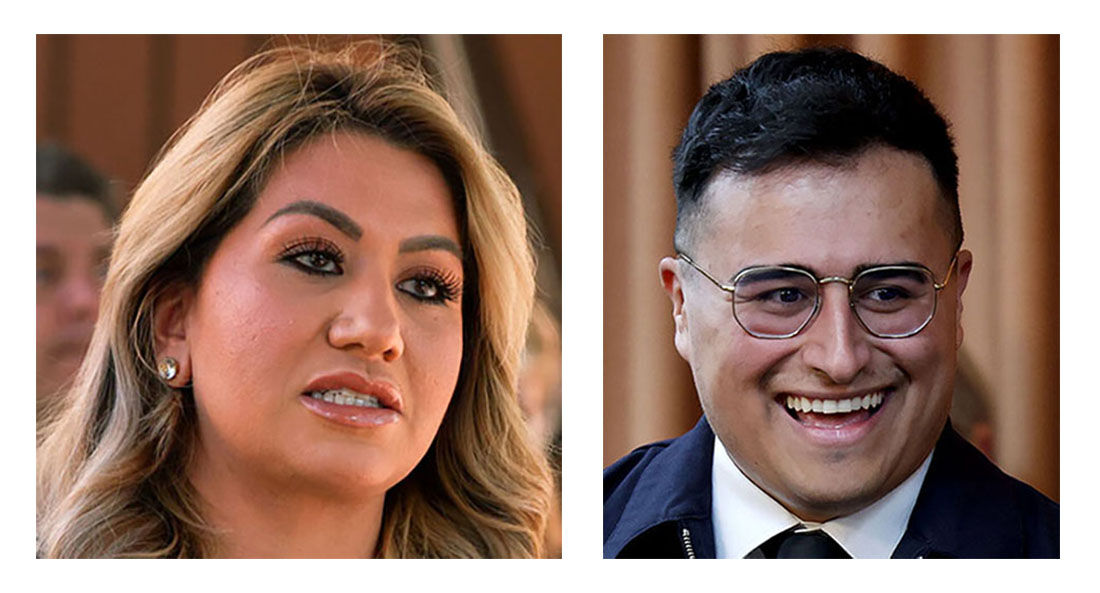
Rep. Alma Hernandez faces a legal effort by challenger Roque Perez to knock her off the ballot in the Democratic primary.
That case, heard by the Arizona Supreme Court in 2018, related to an election challenge against former state lawmaker Devin Del Palacio. That was a challenge to remove him from the ballot "because he was then 'liable' for an aggregate of ($1,000) or more in penalties arising from his failure to comply with reporting requirements in an earlier election,"Â Vice Chief Justice Robert Brutinel wrote in a .
However, "absent the imposition and enforcement of those penalties under (state law), Del Palacio was not 'liable' for any penalties at the time he filed his nomination papers,"Â Brutinel wrote.
In a court filing, Arellano argued that state law requires there be an "appealable campaign finance liability," and that "late fees are not enough."
"The Attorney General has never issued (Hernandez) an appealable notice of penalty or otherwise imposed a penalty constituting liability subject to appeal. She is not and never has been 'liable' for penalties," Arellano wrote. "The online system's automatic calculation of presumptive fine amounts does not constitute 'liability,' let alone the kind from which an appeal may lie ... This is why the Secretary of State correctly requires that any liability amount be stated expressly in an appealable order or judgment before a filing officer may reject a candidate's nomination paper."
"(State law) bars a candidate from the ballot only if 'the person' is liable for any financial penalties ... (Hernandez) as a 'person' would not be liable for the penalty, because Arizona does not impute a committee's financial penalties to those who control it," Arellano argued in the filing.Â
And on Monday, Arellano said that the "operative factor" in the case against Hernandez "is that those fees have never been reduced to actual liability."
"Ms. Hernandez has never received a notice of imposition of penalties from the Attorney General. That's an appealable order, and that's what the statute requires," he argued. "The only operative fact, I think, from those stipulations that is really key here is, again, the fact that the Attorney General's Office has never issued an appealable notice of penalty."
Barton, however, said there is a distinction between the case against Hernandez and the 2018 Supreme Court case, because the challenge against Hernandez is not related to the same state law on which the Supreme Court based its 2018 decision.
The challenge against Hernandez is valid under , Barton argued, which says in part that any voter "may challenge a candidate for any reason relating to qualifications for the office sought as prescribed by law," including age, residency, professional requirements or "failure to fully pay fines, penalties or judgments," the state law reads.
"No one will argue that there hasn't been a judgment. I think there's been a penalty ... it hasn't been referred to the (Attorney General), the (Attorney General) hasn't issued an order. Okay, maybe there's not been a penalty, but there clearly has been fines," he said.
"The failure to fully pay fines has clearly been satisfied ... (the Supreme Court's decision in the 2018 case) doesn't address the fact that the fines were unpaid, it only addresses the fact that there wasn't a judgment issued, and that's just not the language in (state law)," Barton said. "I don't know why the court would look for just a judgment and not for penalties and fines, because the statute lists all three."
Perez added that he thinks there is "a much more substantive record of action being taken" in relation to Hernandez's filing mishaps, and that a 2022 reasonable cause notice by then-Secretary of State Katie Hobbs was not "a matter included in the Supreme Court's ruling or the case that preceded that."
"In this instance, it is in addition to the declaration that there are still outstanding fines relative to (Hernandez's) campaign committee. I think that is a major differentiator in this particular case, and why I would argue that it should be heard," Perez said Monday morning in court.
Another hearing for the case is scheduled for Thursday afternoon in Superior Court.
Meanwhile, Hernandez's sister, fellow state Rep. Consuelo Hernandez, whose district stretches from Tucson's southside to the border, then into Santa Cruz and Cochise counties, is also facing a challenge to her candidacy.
A resident in her district, who's also represented by Barton, alleges that Consuelo Hernandez owes nearly $19,000 in unpaid campaign finance fines. Barton, in a court filing, says that due to the unpaid fines, Hernandez is ineligible for the primary election.
Arellano, who is representing both Alma and Consuelo Hernandez, told the court Monday that the challenge against Consuelo concerns the same legal issue.
A hearing for the challenge against Consuelo Hernandez is scheduled for Tuesday morning.