I was leaving the pharmacy counter at the back of a Walgreens on East Broadway last month when I heard a voice shout "shoplifter in the store."
I looked up and saw a customer around my age following a younger man down an aisle as the customer continued to yell.
He looked at me briefly and pointed at the young man as if asking me to join in.Â

ÃÛÌÒÓ°ÏñAV columnist Tim Steller
It froze me for a second. On the one hand, it wouldn't surprise me if the younger man were a shoplifter — it's so common these days at pharmacies and convenience stores especially — and I like to do the socially responsible thing. On the other hand, I hadn't seen anything wrong happen.Â
I let them go and continued with my own business as I heard the shouts of "shoplifter" wind down.
It feels more common these days for us to face decisions about whether to intervene, especially with thieves shoplifting out in the open. The temptation to intervene may be stronger now in Tucson as people become frustrated over brazen, public crime and the lack of police response.
People are also reading…
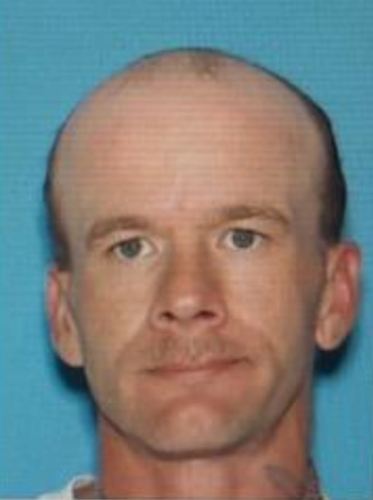
But it's risky for all involved. A customer confronted Emery Kirk in the early morning Nov. 21 after Kirk allegedly went behind the counter of a Circle K at 4160 N. Oracle Road to steal cigarettes. An altercation ensued, and the next day, Kirk, 46, died as a result.Â

Emery Kirk, 46, died when a customer saw him stealing cigarettes at a Circle K store. The customer, 31, intervened, and as a result of the ensuing altercation, Kirk died.Â
Police have not named the customer, but they investigated the case and have handed the results over to the Pima County Attorney's Office for a decision about pursuing charges.Â
"It’s not a citizen’s place to step in on something like that," one of Kirk's siblings, sister Wanda Beatty, told me by phone from Ohio, Kirk's home state. "Over a pack of cigarettes it’s very senseless. It’s 11 or 12 bucks he lost his life over."
Urge to intervene
For the right person at the right time, the urge to intervene becomes irresistible. Tucson City Council Member Paul Cunningham was at a different Walgreens on East Broadway Aug. 8 when, he said, he saw a younger man sweeping large, expensive bottles of liquor into a vinyl bag.
Cunningham started taking photos of the man, who was only a short distance away, he said, while Walgreens employees yelled at the man that the police were coming. But the shoplifter had to go right past Cunningham to get to the door.
"I had the right angle so that when he ran by me, I was able to push him against the wall," he said.Â
The man fell, and the six or seven bottles came out of his bag. He asked the council member for his bag back and left, Cunningham said.
"It was a very impulsive decision," said Cunningham, a former probation officer. "In retrospect, that’s not what I need to be doing. We need to leave that to the police officers."
"This was in my own neighborhood, and it was frustrating to know that people could be that brazen," he said.
Part of the frustration is the fact that shoplifting impacts other customers. In pharmacies, for example, more and more products are locked away behind plastic screens.Â
Josh Jacobsen, who leads the  and owns two Lucky Wishbone restaurants, said, "Look at all the money that’s being put into security, armed security, upgraded security. Eventually it trickles down and makes things more expensive for us. That’s why we call it the crime tax."
Citizens' arrests
Officer James Horton, a Tucson police spokesman, noted that Arizona law does contemplate citizens' arrests, but "it's pretty vague."
Specifically, "A private person may make an arrest:
1. When the person to be arrested has in his presence committed a misdemeanor amounting to a breach of the peace, or a felony.
2. When a felony has been in fact committed, and he has reasonable ground to believe that the person to be arrested has committed it."
"When it comes to shoplifting, we recommend being a good witness," Horton said. "You don't know what their history is or what their intentions are."
And if somebody ends up getting hurt, he noted, that opens people up to civil or criminal liability.
Criminal charges could be filed in the death of Emery Kirk, against the as-yet unnamed customer who intervened. Ronald Moore, another of Kirk's siblings in Ohio, said he was told by a detective that Kirk was attacked by the other customer and ended up falling and hitting his head. That led to a brain bleed that could not be fixed.
The only solace, he said, was that three of Kirk's organs were successfully donated. The timing is terrible, though, coming right before the holidays when money is tight.Â
"Right now we’re trying to work on getting him home," Moore said. "Now the family has to figure out how we’re going to get him from the examiner’s office to the funeral home, to get him cremated, and then send him home."
A calculated risk
Kirk, who moved to Arizona in 2004, had repeated stints in jail and prison for crimes including shoplifting, robbery and burglary. It's unlikely, of course, that the customer who stopped him knew that.Â
In my Walgreens experience, I asked a clerk later what had caused the customer to start shouting about the younger man being a shoplifter. She said when the younger man walked in, employees told him he could not enter because of previous shoplifting.
The older customer took it upon himself, the clerk said, to follow him around and call him a shoplifter. That, eventually, drove the younger man to leave.
So it worked that time, but it's always a calculated risk. You never know what weapon a person might have, what drugs they might be on, how they might react, or how you might react. It could end peacefully, or with somebody dead and another facing a possible manslaughter charge.
As natural as the frustration is, we need to take that into account when we weigh intervening in what is, after all, a rather minor, if exasperating, criminal offense.

Contact columnist Tim Steller at tsteller@tucson.com or 520-807-7789. On Bluesky: @timsteller.bsky.social

Tim Steller
Columnist

 Tim Steller's column: Right-wing political correctness joins left-wing PC at U of A