PHOENIX — The number of measures on the November ballot to curb Arizona school vouchers is now down to one.
On Tuesday, Fortify AZ said it was dropping its proposal that was an alternative to the much stricter limits being pushed by the Arizona Education Association and Save Our Schools Arizona.
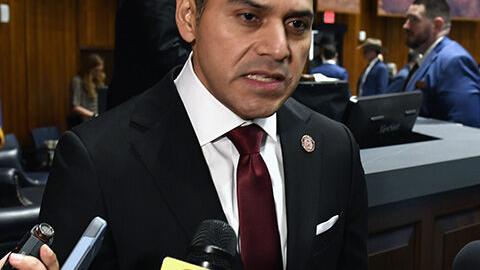
"Fortify is focused on ensuring that the teachers union initiative does not become law,'' said spokesman Barrett Marson.
He pointed out that Fortify AZ was willing to drop its plan when it appeared that there would be a deal between House Speaker Steve Montenegro and the education groups. That would have resulted in the AEA dropping its own more far-reaching plan — including a $150,000 limit on parental income to get a $7,500 voucher of state tax dollars to go to private or parochial schools as well as for home schooling — in exchange for lawmakers approving just some of what was in its initiative.
People are also reading…
"Unfortunately, the deal collapsed,'' Marson said.
But he said that doesn't mean Fortify AZ — and the pro-voucher American Federation For Children that has been funding its own less comprehensive initiative so far to the tune of $1.3 million — is now just going to sit on the sidelines in the upcoming election. Marson said it will now attempt to convince voters to kill the remaining plan advanced by educators and their allies.
There was no immediate response from the AEA.

Arizona lawmakers first approved what are formally known as Empowerment Scholarship Accounts in 2012 to provide vouchers to parents to send their children with special needs to private or parochial schools. Since that time, lawmakers have expanded eligibility, with a 2022 law now making vouchers available to all students, not just for private schools but also for home schooling.
Enrollment ballooned from 12,000 students then to more than 100,000 now, with a price tag exceeding $1 billion. That increase also included children who were already going to private schools with parents who were picking up the tab.
All that led to the Arizona Education Association and Save Our Schools starting a petition drive to put a measure on the ballot with some limits on who could get a voucher and how the dollars could be used.
One provision of the initiative would deny vouchers to families with income exceeding $150,000.
But it also would include a list of items that parents cannot purchase with their voucher funds. That follows media reports of efforts by parents to get reimbursed for everything from out-of-state trips to amusement parks to expensive pianos and even lingerie and jewelry.
And it would require that private schools that receive voucher funds to meet some of the same standards that apply to traditional public schools, like background checks for educators.
Backers have until July 2 to gather 255,949 valid signatures to put the issue on the general election ballot.
Fortify AZ came back with its own plans as an alternative, with a lack of means testing as well as fewer regulations on the schools that accept vouchers.
Now, with the alternative gone, that means voters get a straight up-or-down vote on the education initiative — sort of.
In the waning hours of the session, Republican lawmakers approved what amounts to a "poison pill'' ballot measure of their own designed to kill the initiative — even if voters approve it.
That GOP-crafted measure focuses on the provision in existing law allowing parents to "bank'' funds they do not use in any given school year for future expenses. And that even includes saving the money for college.
The AEA/SOS initiative would curb that ability.
What Republicans voted to send to the ballot is a measure to say that if voters approve any plan that takes away that banking ability from children of military families — one of the groups automatically entitled to vouchers — it directs a court to void the entire initiative. It even has language telling judges they cannot simply excise the provisions dealing with military children and banking and leave the rest of the AEA/SOS initiative alone.
Whether such a preemption is legal is unclear. But lawmakers crafted their preemption as an actual amendment to the Arizona Constitution, something they could argue takes precedence from any changes in state laws like those in the education initiative.
Howard Fischer is a veteran journalist who has been reporting since 1970 and covering state politics and the Legislature since 1982. Follow him on X, formerly known as Twitter, , and Threads at @azcapmedia or email azcapmedia@gmail.com.