Some people are gifted athletes, while others have a high IQ instead of the desired physical traits.
Some are lucky enough to be blessed with brains and brawn, like former Arizona wide receiver and projected first-round draft pick Tetairoa McMillan.
Even though McMillan didn’t perform any of the physical drills at the NFL Scouting Combine in Indianapolis, he took the AIQ (Athletic Intelligence Quotient), a cognitive tool to measure intellectual abilities. Each athlete who takes the AIQ will be subjected to 10 tests that take about three minutes apiece to complete.
Some tests involve reaction time, memorizing numbers and patterns, rotating and matching images.

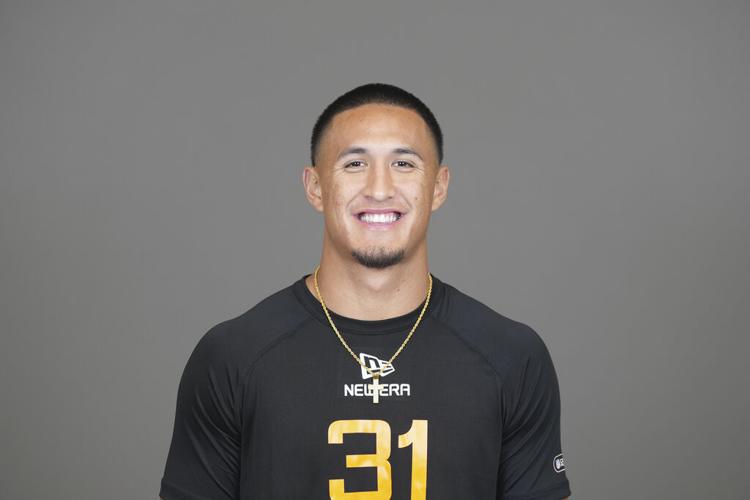
Arizona wide receiver Tetairoa McMillan poses for a portrait at the NFL Combine on Wednesday, Feb. 26, 2025, in Indianapolis.
AIQ, created by psychologists Scott Goldman and Jim Bowman in 2012, “has been under wraps,� but is now used by the NFL, MLB, NBA, NHL and MLS, in addition to Premier League and La Liga soccer leagues in Europe and rugby clubs in Australia and New Zealand.
People are also reading…
“I think of sports as an unsolvable puzzle,� Goldman said. “It’s constantly mutating and it’s really challenging, especially in the NFL, where it’s really sophisticated. When we created the AIQ, it was about what kind of aspects of intelligence are needed to solve this challenge?�
McMillan’s AIQ score from the NFL Scouting Combine wasn’t disclosed, but he recorded a “superior score� and “had one of the top wide receiver scores we received in our (all-time) database,� Goldman told the Star. McMillan had the highest AIQ score of the receivers at the NFL Scouting Combine, according to .
McMillan’s “cognitive profile highlights his exceptional ability to learn, adapt and make quick decisions on the field,� according to his AIQ analysis provided to the Star.
“His superior scores in acquisition, decision-making and reaction time make him a highly valuable wide receiver, capable of executing complex plays and adjusting to defensive strategies,� according to the report. “His strengths in multiple target search and spatial awareness further enhance his effectiveness in identifying key cues and maintaining proper positioning.
“Overall, McMillan’s cognitive abilities position him as a standout player with the potential to excel in various offensive schemes.�
Goldman joined “Spears & Ali� on ESPN Tucson to talk about AIQ, its purpose and why McMillan tested so well. Here’s what Goldman discussed:

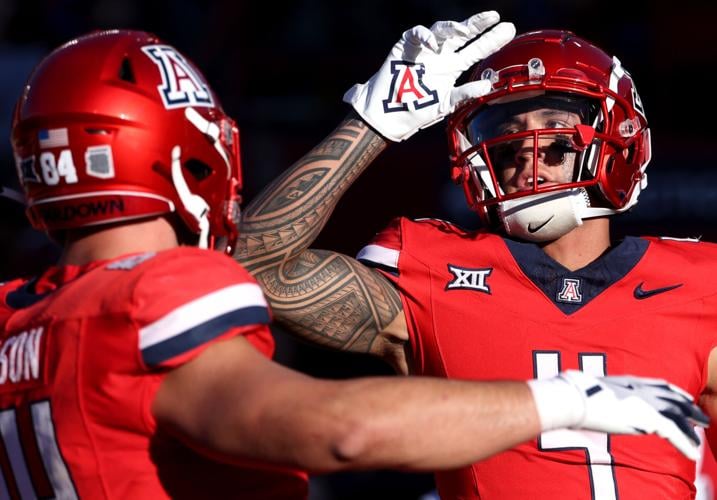
Arizona receiver Tetairoa McMillan, right, flips a salute after hauling in the Wildcats’ only score of the afternoon in the third quarter against Arizona State in the 98th Territorial Cup on Nov. 30, 2024, at Arizona Stadium.
Why did McMillan test so high?
A: “The most likely reason for why he tested so high is he is just an incredibly intelligent individual. Intelligence is one of the most genetically stable traits we have; it’s like eye color in a way. Some people are gifted with height and some people are blessed with really good looks and some people are gifted with a high level of intelligence. There are so many ways to be successful in life and in sport.
“There’s a rich and complex tapestry of human beings and part of what we do in the sports world is we help make well-informed people and decision-makers. We just assumed that the more well-informed they are, the smarter decisions they’ll make. When you understand someone like T-Mac and what he can do, some of it is done with physical ability, some of it is done with work ethic and some of it is done with his intelligence. It’s exciting to watch someone have a unique profile.�
What is it about AIQ that’s able to measure an athlete’s intelligence to their craft specifically?
A: “Psychology is hard to define. Sometimes we think of the mental aspect of sport as an emotional intelligence. ‘Is this guy going to be a cancer in the locker room or is he going to be a glue guy?’ You hear it all the time, ‘This guy has a great football IQ.’ That’s more about knowledge. Then you have intelligence, which is what we’re talking about. Intelligence is that foundational piece. We all know that two plus two equals four, but there was a time where we had to conceptualize that.
“So, back in the first grade, the teacher had two apples in front and had two apples with another group, then said, ‘OK, there’s two apples here and two apples here. Together, they make four apples. Let’s count them: one, two, three, four.’ Some people can figure those puzzles out quicker and easier than others. When we created the AIQ, we started with the concept of, ‘What kind of puzzles are they doing?’ If you think about a quarterback, who has to identify the ‘Mike’ (linebacker) or look at the defensive backs and what kind of coverage they’re in, there’s a pre-snap ability to look and scan for important pieces of information and recall from the installs throughout the week. That’s a lot of intellectual capability.
“It’s similar to a firefighter who kicks the door down and scans and looks for threats of danger, as well as people to rescue and save. When we did this, it took 15 years. We didn’t do just athletes, we did military, firefighters, first responders. Any time you have a live-action and constantly-mutating puzzle that’s chaotic in nature, we focus on those type of intellectual abilities.�
What goes into an AIQ test and how is one scored?
A: “The way it looks — and we did this by design — is it looks like games you would see on an iPad or an iPhone. Things like Tetris, Candy Crush or anything that’s rotating and mutating the environment. That’s what it looks like. We did it so there wouldn’t be a cultural bias.
“There’s no bias to race, religion, socioeconomic status or geographical location. I grew up in New Mexico and some in Tucson might relate to this, but some intelligent tests will ask, ‘What is a schooner?’ That always used to bother me, because I don’t know what a schooner is, I’m from the desert. Schooner is just another word for boat. If I lived in a coastal city, I have a competitive advantage, when people can mislabel as intelligence.
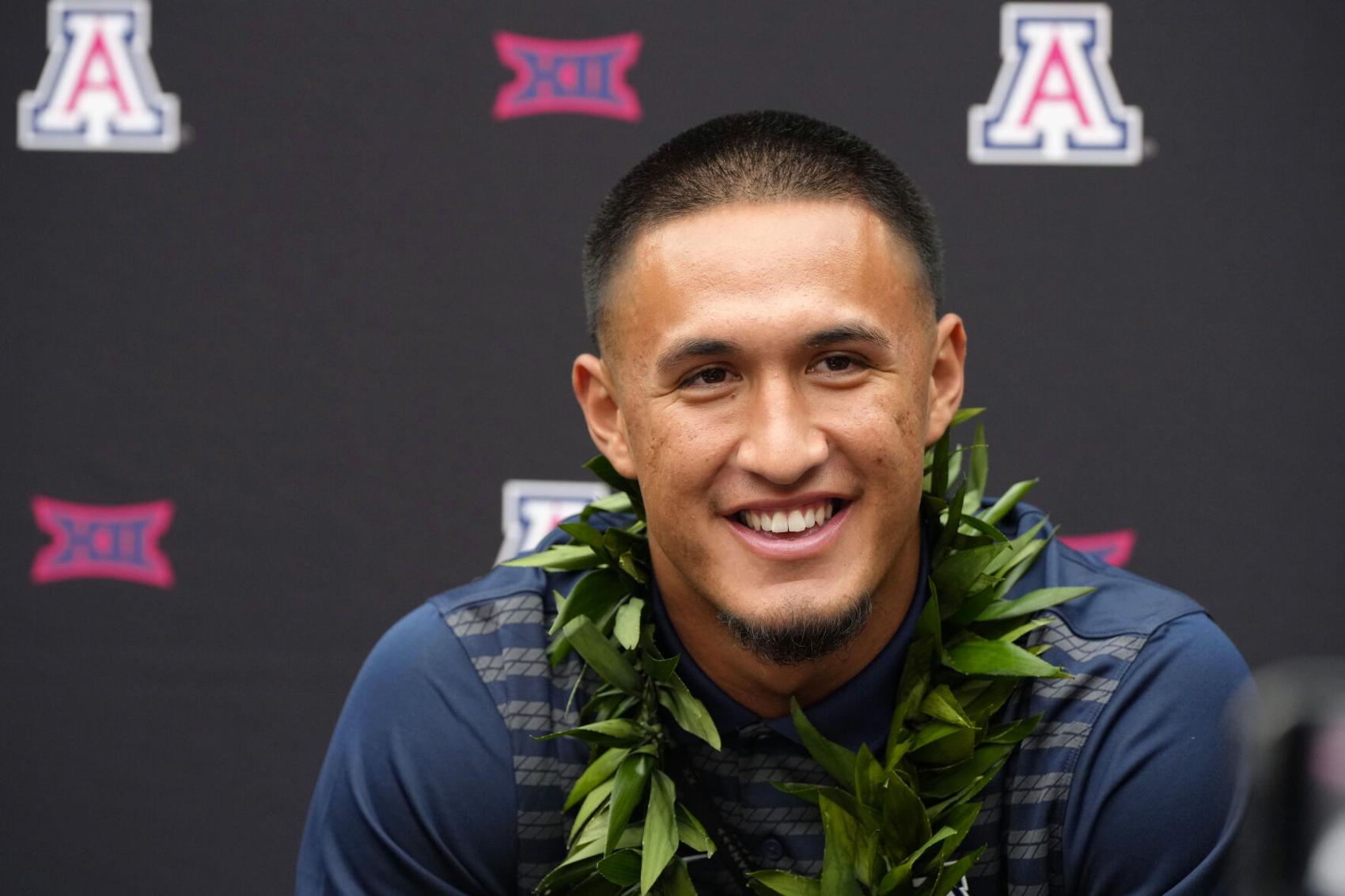
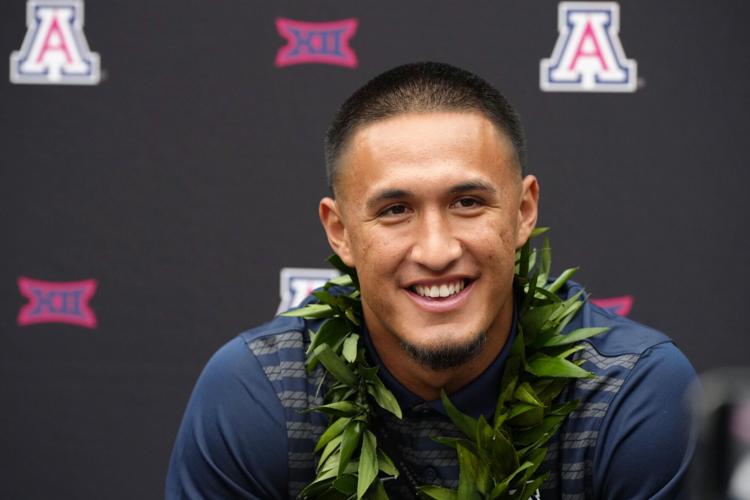
Arizona wide receiver Tetairoa McMillan answers questions near the tail end of Day 2 of Big 12 football Media Days on July 10, 2024, at Allegiant Stadium in Las Vegas.
“We eliminated all of that language-based stuff. What we hear from the players who take the AIQ is, ‘That was hard.’ We’re trying to differentiate the top 1% of athletes. The second thing we hear is, ‘That was fun because it didn’t ask me if I liked dogs or cats. What’s a schooner?’ That’s how it looks when a player interacts with it.
“We go over the reports with the players, the agents and the teams. The design and focus is to help people understand. Your couch exists in the living room, whether the lights are on or off. The couch is there and to not know the couch is there with the lights off, it prevents you from having a place to sit and it’s also an area that you can trip over. A player’s athletic intelligence and profile, it exists whether you know about it or not. We might as well know about it.
“I always tell players, ‘Whether you have a high score or a low score, that doesn’t mean you’re going to be successful or you’re going to fail. It just means we have to understand how you do it.’ Some people will really emphasize their athleticism. For wide receivers, it’s catching a bunch of high-radius balls or throwing it up in the air and out-jumping their opponent. Other folks, who might not be as physically gifted, have to be more deceptive in how they run their routes or they have to be more crafty when they sit in a zone.�

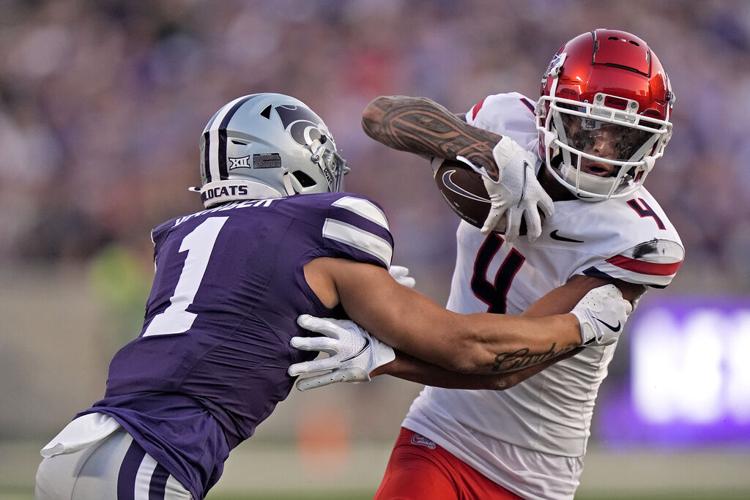
Arizona wide receiver Tetairoa McMillan, right, tries to get past Kansas State cornerback Keenan Garber during the first half of the teams’ Sept. 13 matchup in Manhattan, Kansas, in 2024.
Have you seen any correlation between a high AIQ score and success on the field?
A: “This is where I have a not-so-humble brag, it’s just a straight brag: we have five research papers — five! I don’t know any other product or vendor out there that has one research paper. A lot of companies will do their own research, but when you do your own research, it’s easy to cheat the numbers and make it look good for you. When I say we have a research paper, I’m talking about a professor — with no affiliation to the company and wasn’t paid and was independent — submitting something as an academic journal.
“When professors evaluate other professors’ work, they go through the process of how they evaluated the data and making sure everything is above ground. ... One of them shows the correlation between high AIQ scores and NBA performers. It showed field-goal percentage, rebounds and pretty significant stuff. The second research paper we have is with Major League Baseball and things like batting average, slugging percentage, ERA — again, pretty significant stuff.
“The other three papers are on the NFL. ... We found things like passing yards, passing (touchdowns), rushing yards, rushing (touchdowns), turnover-worthy plays, career longevity. We tapped into another element of what can make these players successful.�
Contact Justin Spears, the Star’s Arizona football beat reporter, at jspears@tucson.com. On X(Twitter): @JustinESports

Justin Spears
Sports Reporter


 10 memorable conference tourney moments for Arizona men's basketball