Illinois jails originally had up to 20 days to transfer an unfit inmate to a state-operated mental health facility.
But in January 2023, Gov. JB Pritzker signed into law an amendment extending the transfer deadline to 60 days in response to a growing backlog of unfit detainees stuck in county jails.
However, jail administrators and sheriffs say the increased wait time , causing inmates’ mental health to further decline. As of September, the average wait time to transfer an inmate either unfit to stand trial or not guilty by reason of insanity to a mental health facility was 74 days.
People are also reading…
Former Sangamon County Sheriff Jack Campbell, who was one of a handful of sheriffs who sued the state after the 20-day transfer deadline was first suspended in 2022, said if the state won’t re-establish the original deadline, it should reimburse the jail every day the unfit inmate stays in custody beyond the 20 days.
“Some of the inmates in our jails don’t really belong in jail" Campbell said. "They need to be in specialized treatment facilities where they can get the help they need."
Legislation was introduced in 2024 that would remove the 60-day transfer requirement and require IDHS to reimburse the sheriff for housing and mental health services of inmates waiting longer than 20 days for transfer. The sheriff also would not be held liable for any issues encountered after the 20th day the inmate remains in their care.
After the bill failed to make it out of committee, , R-Metamora, reintroduced the proposal in 2025. Although it achieved bipartisan support amongst 24 House sponsors, this iteration also failed.
"DHS came in two years ago and lobbied to have this raised to 60 days to give them more time to get people out (of jails)," Tipsword said. "IDHS failed when their 20-day mark was there (and) they're failing miserably at the 60-day mark."

°Õ¾±±è²õ·É´Ç°ù»åÌý
Summer Griffith, IDHS public information officer, said the department opposes the bill because, amongst other problems, it creates unrealistic timelines and fails to prioritize individuals with the greatest clinical need for admission.
The department is working with Kankakee and McHenry counties on a pilot program where properly staffed jails will accept inmate placements from other mental health facilities.
The pilot initially sought to provide clinical staffing for a 12-16 bed unit with co-ed capacity for detainees from Kankakee and from other county jails lacking “robust ." But with the inclusion of McHenry County, the program offers 32 beds. The Franklin County Jail will also join the program.
Staffing includes at a minimum, a licensed psychiatric provider for both in-person and telehealth services, a licensed clinical Social Worker, LCPC or licensed clinical psychologist for daily programming, clinical monitoring, and mental health crisis intervention and a case manager for tracking, monitoring and discharge planning.
Griffith said the program has been accepting participants for more than year. Transfers have been accepted from as far away as Union County.
"We are optimistic on expanding the pilot program with other counties and are working towards that goal in the near future," Griffith said.
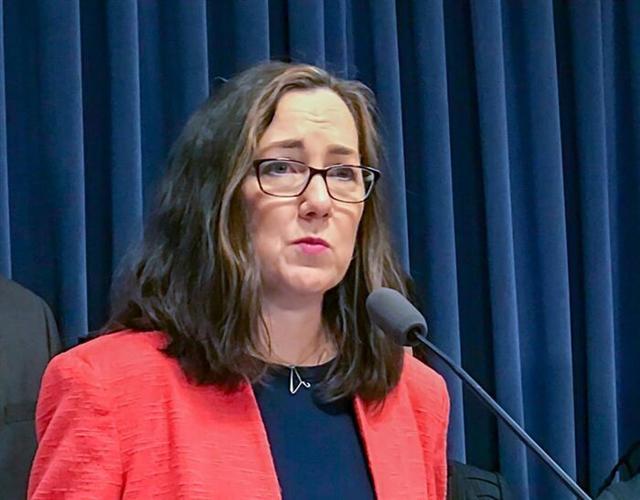
Illinois Rep. Kelly Cassidy says the pilot is a step in the right direction, but that more needs to be done.
“These little one offs aren’t going to do the job,� Cassidy said. “We’ve got too many people waiting for too long.�

Kelly Cassidy
One of the most well-known cases challenging the length of the competency to stand trial process was in Trueblood v. Washington State Department, which alleged that wait times were violating inmates’ constitutional right to due process.
Unlike Illinois, the state of Washington must provide competency evaluations within 14 days and competency restoration services within a week of a court order being issued. Fines can be imposed if these deadlines aren’t met.
“Our jails are not suitable places for the mentally ill to be warehoused while they wait for services,� the 2015 ruling read. “Jails are not hospitals, they are not designed as therapeutic environments, and they are not equipped to manage mental illness or keep those with mental illness from being victimized by the general population of inmates.
In response to the ruling, Washington passed a law providing for timely competency evaluations and restoration services for detainees experiencing behavioral health disorders. A forensic navigator program and outpatient competency restoration services also were created.
The settlement agreement also called for the expansion of residential mental health with crisis services, additional training for jail staff and law enforcement and the hiring of more mental health professionals to educate the courts about the availability of support services for detainees awaiting transfer.
However, the number of annual inpatient referrals for jail detainees increased from 996 in the state’s 2015 fiscal year to as many as 2,413 in fiscal 2022.
Contact Drew Zimmerman at 309-820-3276. Follow Drew on Twitter: @DZimmermanLee