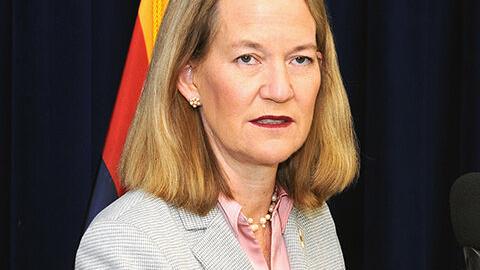
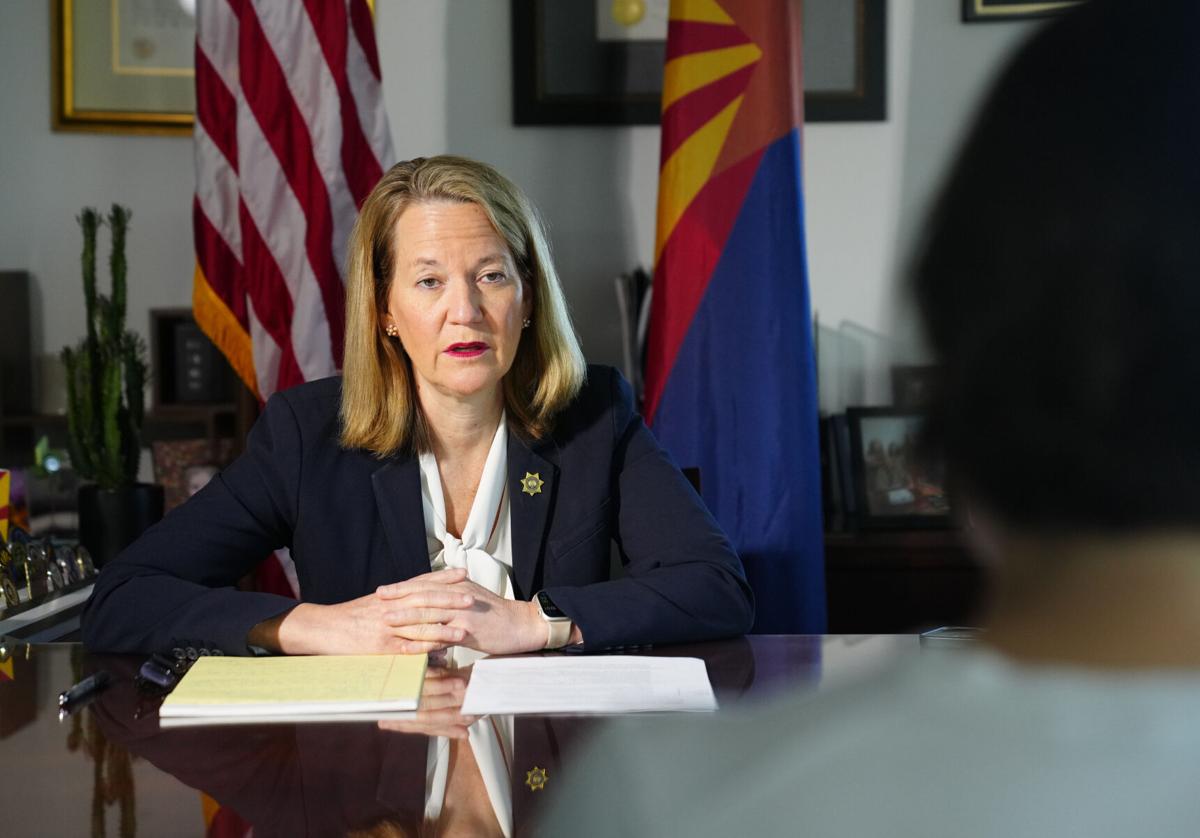
PHOENIX — Arizona Attorney General Kris Mayes is dropping the criminal charges against the fake electors and their allies — for now.
In a new court filing, the head of the Attorney General's criminal division, Nicholas Klingerman, said there is no way he could start a new grand jury probe by June 19. That was the deadline set by the Arizona Supreme Court for Mayes to either refile the case or have it dismissed entirely. It came after the justices upheld lower court rulings that the original indictment was flawed because grand jurors were not given all the information they needed to decide whether a crime had been committed.
But Mayes continues to insist she wants to pursue the case. So the only option left to her — given what she said is her office's inability to convene a new grand jury by the deadline — was to ask Maricopa County Superior Court Judge Sam Myers to dismiss the case "without prejudice,'' a method that legally would allow her to refile the charges when she is ready.
People are also reading…
"This case is complex and will require substantial presentation of evidence,'' Klingerman told the judge.
It took prosecutors 13 days of testimony, albeit over weeks, to outline the case for the grand jury ahead of the 2024 indictment charging 18 people with fraud, forgery and conspiracy charges in connection with the 2020 presidential race.
Among those indicted were 11 Republicans who signed and submitted documents to federal officials claiming they were the state's legitimate presidential electors despite the fact that Democrat Joe Biden defeated Republican Donald Trump in Arizona in 2020.Â
The other seven defendants worked for Trump or represented him as attorneys. The indictment said they were part of crafting a plan for Arizona and other swing states to throw the electoral count in doubt, denying Biden the necessary 270 votes, in order to have Congress decide who won.
That first indictment came after more than a year of investigations, interviews and review of applicable laws. None of that needs to be repeated.
What could take longer this time, according to Klingerman, is that some of the defendants want to testify themselves before the grand jury and present evidence, something they have the right to do.
But the fact that Mayes wants more time doesn't necessarily mean she will get it.
Attorney Mark Williams, representing Rudy Giuliani, who was a Trump attorney, said he will ask Myers to reject Mayes' request and dismiss the case "with prejudice,'' meaning it cannot be refiled.
He acknowledged that the Arizona Rules of Criminal Procedure generally stipulate that when an indictment is dismissed, it is done without prejudice, allowing the prosecution to start over. But Williams said it also says judges can make a case go away permanently if they conclude it is in "the interests of justice.''
"The case brought by the state was frivolous,'' he said. "It was brought to punish Mr. Giuliani and the other defendants for exercising rights.''
A spokesman for Mayes said neither she nor anyone in the office can talk about the case now that it's going back to a grand jury.
But just a day earlier, while discussing an unrelated drug case, Mayes defended pursuing this case, saying it is important to make sure no one "can try to undermine our sacred Constitution, and our safe and secure election process.''
Former state Sen. Anthony Kern, one of the indicted electors, pointed out that Mayes, a Democrat who won her 2022 race by just 280 votes, is now seeking reelection to another four-year term.
Letting the fake electors case die now, without making another stab at it, Kern said, would be an admission that it never should have been brought in the first place. He said Mayes is "saving face'' by keeping it alive.
There's also a question of timing. "If she's behind in the polls she might want to file in October because it'll give her some media attention and maybe get the base to get out and vote,'' Kern said.
Attorney Kurt Altman, who represents Mike Roman, one of the indicted electors, said he also sees politics in this.
"It's comical that they're going to repanel another grand jury and spend another couple more years doing this,'' said Altman. "But she wants to get through November.''
The "years'' projection is based on the fact that even if there is a new indictment, the case cannot go to trial right away.
There are several issues Myers has to first resolve.
One is a complaint that Mayes violated the state's Strategic Lawsuit Against Public Participation Law. It is designed to prevent public officials from using the courts to punish and prevent speech on political issues.
Myers, in a preliminary ruling last year, said there was enough presented to him to suggest the indictment against the electors and their allies appeared to attack what is "at least in part some arguably lawful speech.'' But there was never a final ruling after the indictment was thrown out.
Attorney Tim La Sota, who represents state Sen. Jake Hoffman, another of the indicted electors, said that preliminary finding by Myers shows the case "was brought to deter, prevent, or retaliate against our client's constitutional right.''
"It should be dismissed with prejudice forever,'' he said.
There also is a separate — and so far unresolved — claim by Christina Bobb, one of Trump's former lawyers who is among those indicted, to have Mayes and her entire office disqualified based on claims the case was prepared not by the Attorney General's Office but by an outside group.
There is another wildcard in all of this. Both Warren Petersen and Rodney Glassman, the two Republicans vying to take on Mayes in the general election, have said if they are elected they will dismiss the entire case.
If there is a new indictment it will not include everyone charged the first time. Loraine Pellegrino, one of the electors, pleaded guilty to a reduced charge. And plea deals were made with Jim Lamon, another elector, and Jenna Ellis, an attorney with the Trump 2020 campaign, with charges being dismissed in exchange for their cooperation in prosecution of the other defendants.
Howard Fischer is a veteran journalist who has been reporting since 1970 and covering state politics and the Legislature since 1982. Follow him on X,  and Threads at @azcapmedia or email azcapmedia@gmail.com.