Toward the end of a 35-minute news conference Wednesday in Texas, while Big 12 Chief Basketball Officer Brian Thornton fielded a question, Arizona coach Tommy Lloyd glanced down at his phone.
That was hardly a surprise. Maybe more so than any other Big 12 coach this week, Lloyd has been pulled all over the place, especially when it regarded power forward Koa Peat.
As the withdrawal deadline for the NBA Draft approached Wednesday night, it remained unclear if Peat would return to Arizona for his sophomore season, meaning Lloyd had to keep in contact with Peat and his people — while keeping recruiting options open to land a potential replacement if Peat did not.
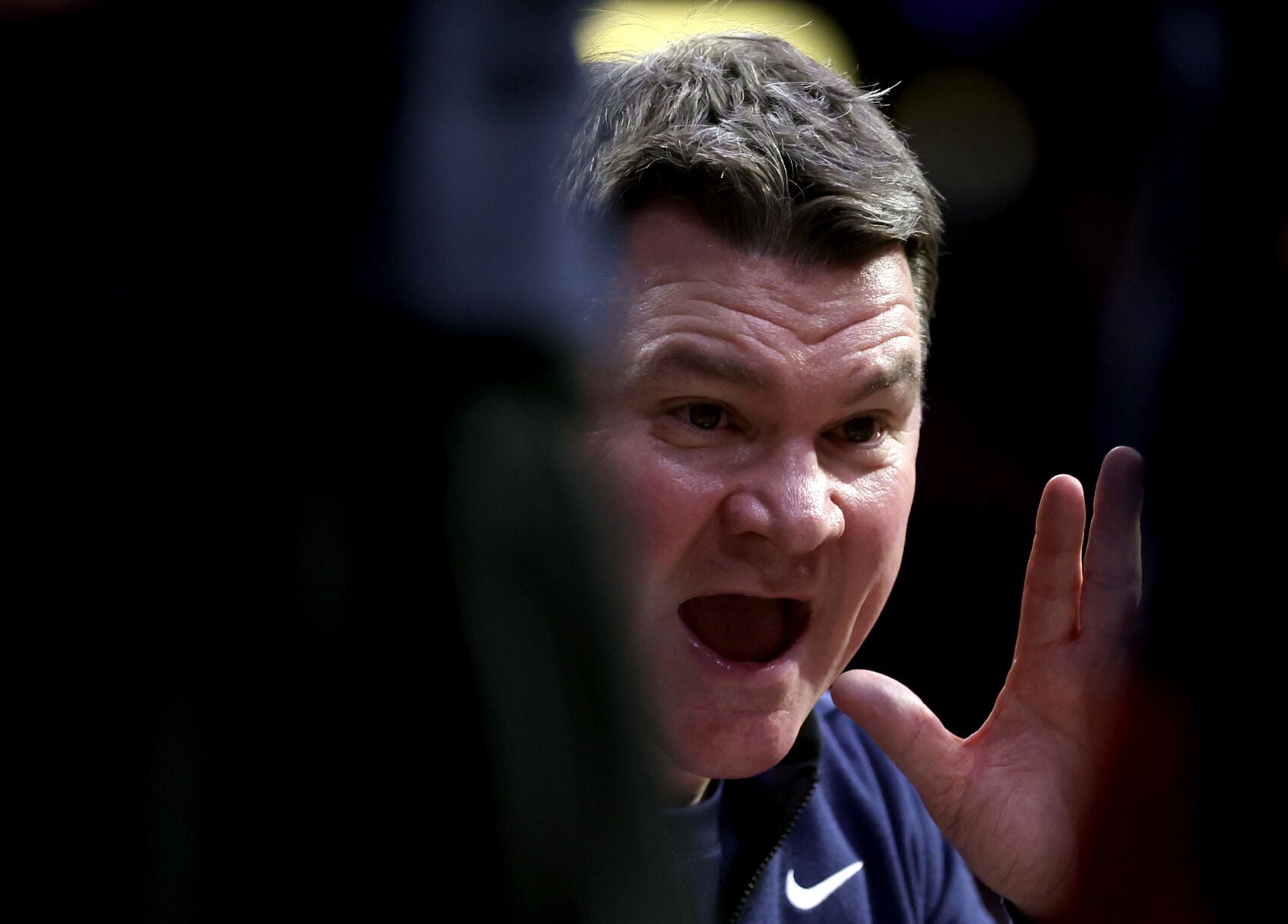
Arizona head coach Tommy Lloyd organizes the Wildcats during a time out in the second half against BYU, Feb. 18, 2026, in Tucson.
At the same time, Lloyd spent time at the Big 12’s annual spring meetings to discuss big-picture items in his fast-changing profession, such as the proposed eligibility rule allowing athletes a firm five-year window to play within, and conference issues, including whether to revert to 20 conference games.
People are also reading…
His plate was full.
“The timing is never perfect,� Lloyd said. “I don’t know, but when they pick the dates for this meeting, they're probably not looking at the withdrawal date.
“Obviously we've had a lot of conversations with Koa and his family, and we're going to support whatever decision he ultimately ends up making. But you are juggling two things. You're checking your phone a little more often than you would be otherwise.�
Peat has been projected as a mid to lower first-round pick, an area in which players with remaining eligibility can make as much or more by staying in college than signing an NBA contract tied to the first-round rookie salary scale.

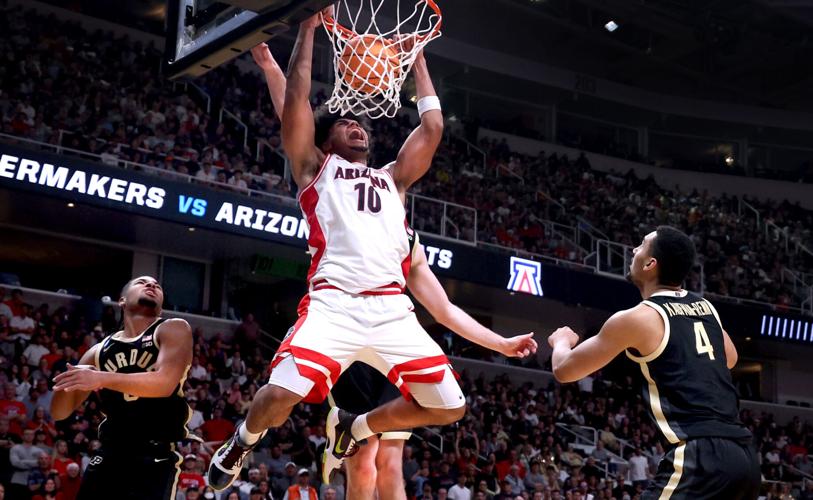
Arizona forward Koa Peat (10) makes the big slam amid the Purdue defense as the Wildcats put their stamp on a 79-64 win in their Elite Eight game in San Jose, Calif., March 28, 2026.
So when asked how he balanced supporting Peat with also assuring him he had a great opportunity to return to Arizona, Lloyd said he believed in “preloading� those sorts of conversations and then letting the player sort it all out.
“Obviously, it's the player's race to run, and you have to respect that, but you set a criteria of what's going to help them make their decision, and then ultimately you have to support them,� Lloyd said. “I mean, these aren't easy decisions. I think a lot of things in life you get second chances at. You could pick a school, and you can transfer, you can get married, get divorced, and get married again. This decision you get one time to really cash in your chips, so to speak. So it's a big decision.
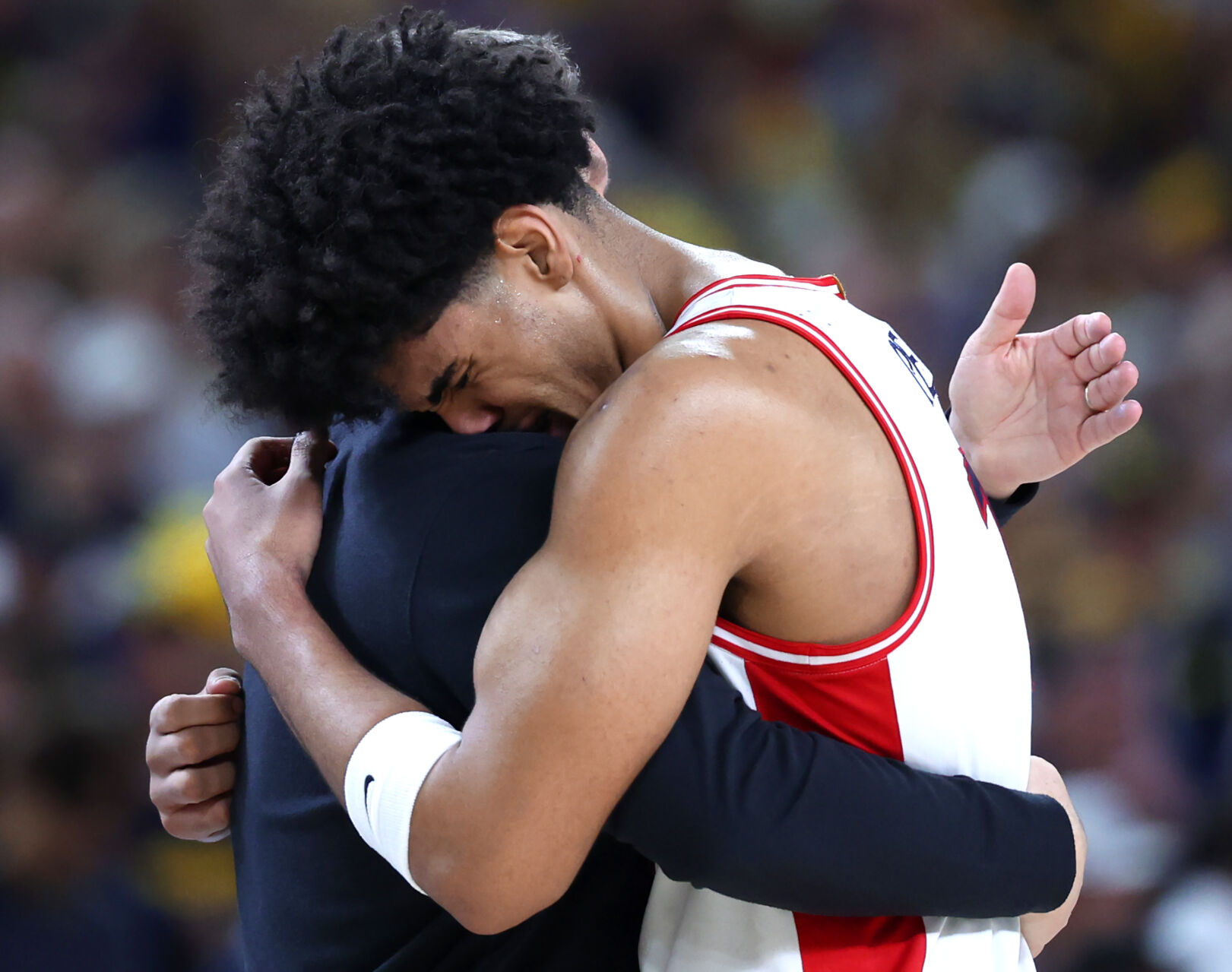
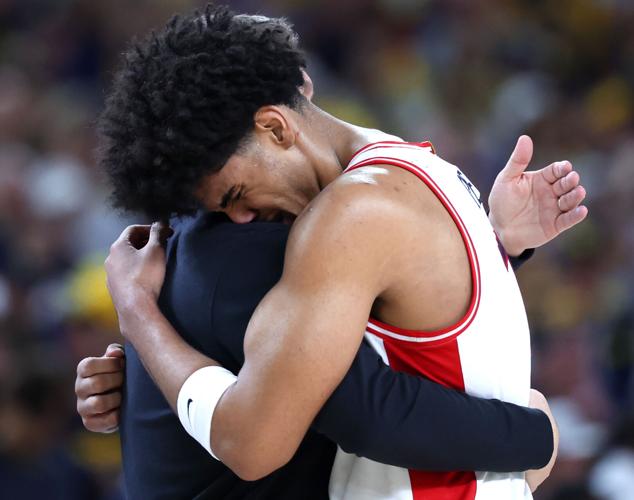
Arizona forward Koa Peat gets a hug from head coach Tommy Lloyd as he comes off the court in the last seconds of their 91-73 loss to Michigan in the Final Four game in Indianapolis, April 4, 2026.
“College coaches, I think we always get looked at as selfish, if you're trying to keep the players in the program. Obviously you want good players and good kids in your program, so it can make it a delicate situation. There's no doubt about that.�
Meanwhile, Lloyd and West Virginia coach Ross Hodge touched on national issues that were discussed during their meetings, such as the five-in-five rule that will allow players unlimited eligibility within a five-year period following their high school graduation or 19th birthday — but with a hard cap that would not allow waivers beyond the fifth year.
In some ways, they’re issues Hodge said coaches really hadn’t had time to contemplate since their seasons ended.
After that, “you're immediately trying to figure out your roster retention or recruiting, so really like any other thoughts going into a five-in-five or a calendar (change), that's like at the end of the thinking,� Hodge said. “It's more like just tell us the parameters of which we can operate in, and we'll operate in those parameters.�
Lloyd added that he supported “giving coaches more autonomy to do what they want, what they feel like is best for their program,� would help with operating over a summer calendar, which involves both recruiting and offseason workouts.
At the same time, the Big 12 coaches may have an issue ahead with their in-season calendar: The league reduced from 20 to 18 conference games last season, but, especially with the NCAA now allowing teams to schedule an extra game overall, has been considering a move back to 20.
Lloyd said there is a “general consensus� among Big 12 coaches still favoring 18, saying he likes it because of the added flexibility it gives for nonconference scheduling, but acknowledged that 20 would give the Big 12 more inventory to keep media partners happy.
Thornton confirmed as much.
“I think it's on the table, but no decisions have been made,� Thornton said. “This week was the first time we really dove into that conversation. We understand that people have to plan accordingly, and if we decide to move in that direction, it needs to happen fairly judiciously and quickly.
“The conversations around why we're even talking about it are around the fact that we have media free agency coming up in 2030 and the more quality games, the better.�
Contact sports reporter Bruce Pascoe at bpascoe@tucson.com. On X(Twitter): @brucepascoe

Bruce Pascoe
Reporter