A critical minerals mine under construction in the Patagonia Mountains would be allowed to expand onto Coronado National Forest land, under a draft decision released by the U.S. Forest Service.
Australian mining giant South32 is seeking permission to build a roughly 8-mile access road, a 7-mile overhead power transmission line and a second, 226-acre tailings pile on forest land to support its underground mine about 75 miles southeast of Tucson.
The Forest Service signaled its intention to approve those plans in a draft , along with the agency’s on the proposed mining infrastructure.
People are also reading…
With the publication of those documents, a 45-day objection period is now open for those who previously submitted specific, written comments earlier in the environmental review process, which began in 2024. Qualified individuals or entities have until April 20 to lodge their objections.

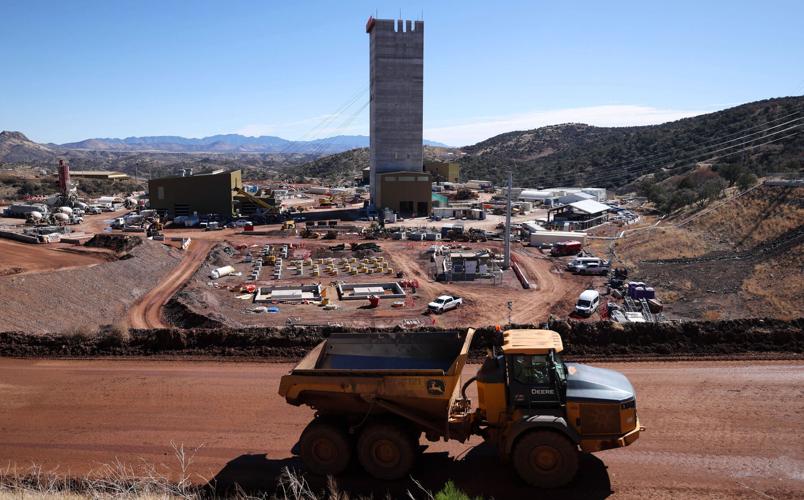
The view from an observation platform shows construction activity at the South32 Hermosa critical minerals mine in the Patagonia Mountains.
South32 is developing its $2.5 billion Hermosa Project on private land it owns in a historic mining district about 10 miles from the Town of Patagonia. Construction is roughly 50% complete, with zinc production on track to begin in 2027.
The project could also produce battery-grade manganese, silver, lead and copper over its projected lifespan of up to 70 years.
South32 officials have long said the mine would move forward regardless of the outcome of the Forest Service review, but they expect the access road and power line to reduce traffic congestion and fossil-fuel emissions while the second tailings stack extends the overall life of the project.
“This draft decision affirms our design and development approach including mitigation measures as described in the Final Environmental Impact Statement that were informed through agency and public consultation,� said Hermosa president Pat Risner in a written statement.

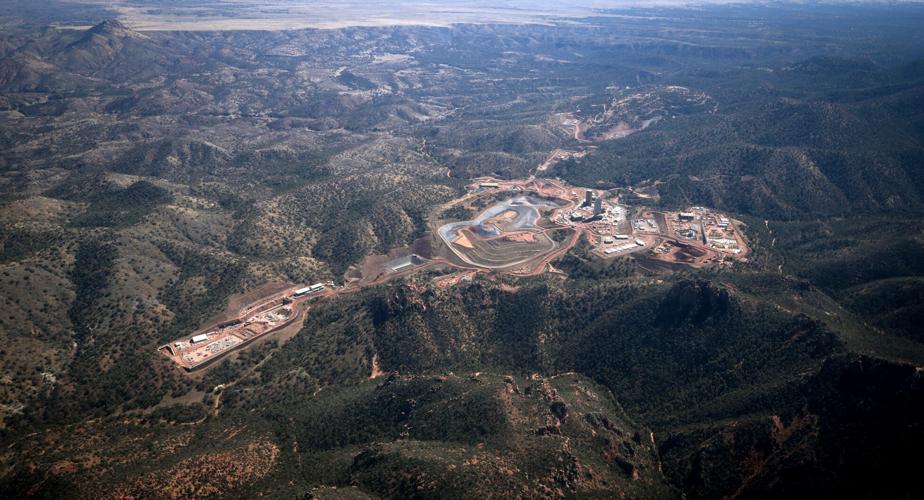
South32 Hermosa mining project in the Patagonia Mountains, as seen from the air during an EcoFlight on March 3.
Forest officials are also poised to sign off on South32’s discharge plan for the water the mine will pump from its underground workspace and collect from its tailings stacks. After passing through the onsite treatment plant, the water will be released into Harshaw Creek, Goldbaum Canyon and Mowry Wash to flow downhill and percolate back into the underground aquifer.
The Forest Service is expected to issue its final record of decision in July, followed by another objection period and, finally, a notice to proceed in early September, clearing South32 to begin work on forest land.
Among those lining up to object are members of , a grassroots nonprofit formed in 2011 to protect the small community, its watershed and the surrounding mountains from mining development. In an email last week, the alliance’s executive director, Anna Darian, said the group was standing ready to review the Forest Service documents with their technical team and respond accordingly.
“We remain committed to holding public agencies accountable for protecting the health of our community and the integrity of this unique ecosystem,� Darian said.
Others had their responses to the Forest Service already locked and loaded.
Russ McSpadden, Southwest conservation advocate for the Tucson-based , called Hermosa “a nightmare for the Patagonia Mountains.�
“This company has a permit to drain 4,500 gallons of water per minute from the mountain, which amounts to more than 2 billion gallons per year,� he said. “The mine would expand into the national forest with a new tailings facility, transmission lines, roads and industrial lighting. This project and the Forest Service’s decision would threaten the clean water, air, and wild landscapes that sustain both wildlife and local communities.�

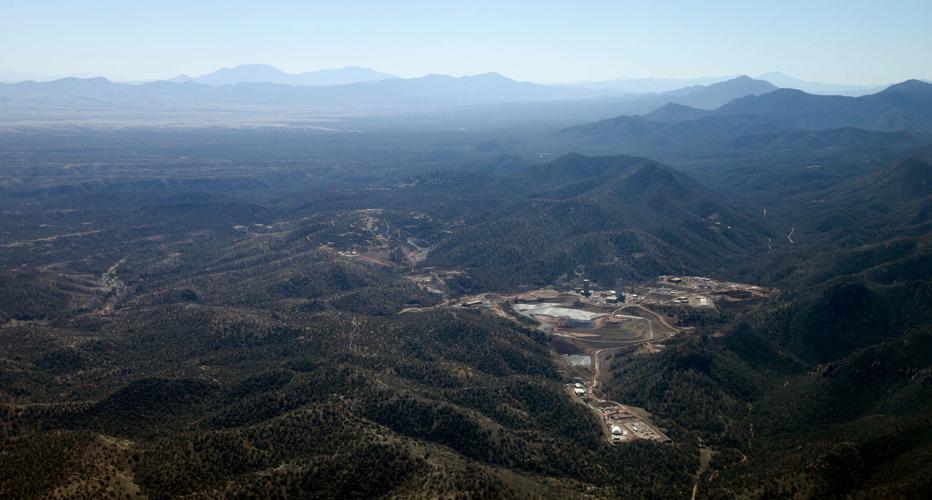
South32 Hermosa mining project in the Patagonia Mountains, as seen from the air during an EcoFlight tour on March 3.
South32 officials insist their mine is designed to minimize its environmental impact, with a surface footprint of about 750 acres and 90% less water consumption than other mines in the region.
The company is also touting extra measures it plans to take to lessen the impact of its infrastructure on forest land. They include redesigning the second tailings stack to avoid an endangered plant; collocating the power line and access road to reduce habitat fragmentation; installing wildlife crossings under the road and recreational pullouts along it; minimizing light pollution; and conducting voluntary monitoring and mitigation work beyond its permit requirements for public and private water wells and groundwater-dependent ecosystems such as seeps, springs and surface flows.


 Critical minerals mine near Patagonia now 50% complete as final federal approval nears